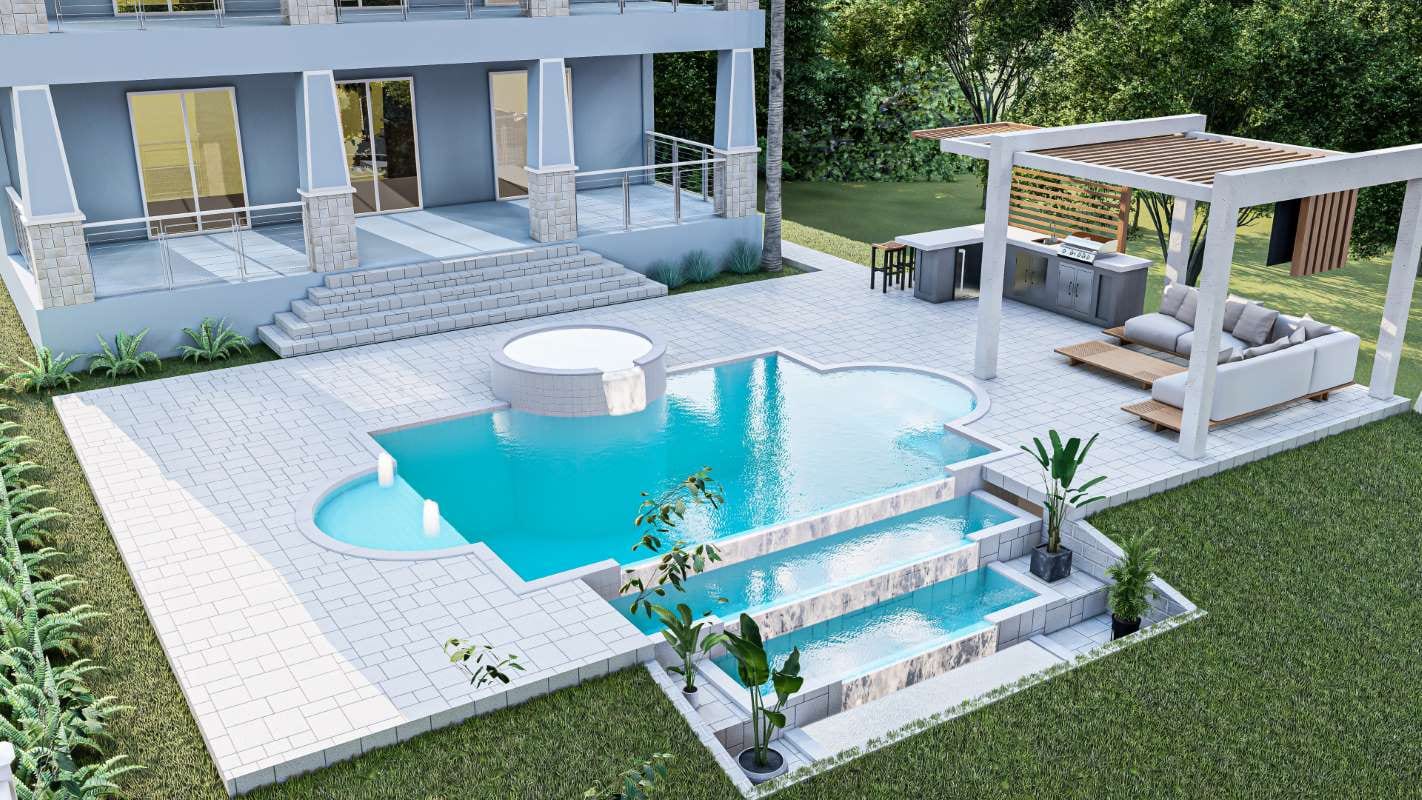
📌 Key Takeaway: Florida's diverse markets — from Orlando's suburbs to Cape Coral's canals — offer pool service owners a rare combination of year-round demand, affordable route acquisition costs, and strong recurring revenue when you partner with the right supplier.
Why Florida Is a Smart State for Building a Pool Service Business
Florida's climate is a pool owner's best friend and a pool service operator's steady paycheck. With 300-plus sunny days per year and warm winters that keep pools in use through December, service contracts don't pause the way they do in northern states. That translates to consistent monthly billing with minimal seasonal gaps — a structural advantage most other industries simply don't have.
The five markets covered here — Orlando, Cape Coral, Tallahassee, Tarpon Springs, and Casselberry — each have distinct characteristics worth understanding before you commit capital. Treating them as interchangeable will leave money on the table.
Orlando and Orange County: Volume and Density
Orlando's metro area is one of the densest concentrations of residential pools in the country, driven by years of new construction, short-term rental growth, and a population that skews toward homeownership with outdoor living space. For a route operator, density matters: the fewer miles you drive between stops, the more accounts you can service in a shift without adding a truck or technician.
Orange County's HOA communities are particularly attractive. Many HOA contracts cover common-area pools and amenity centers on top of individual residential accounts, giving you a mixed portfolio that stabilizes revenue if any single homeowner cancels. When evaluating pool routes for sale in this market, pay attention to how the accounts are clustered geographically — a tight cluster in a master-planned community is worth more than the same number of accounts spread across 30 miles of suburban sprawl.
Cape Coral and Lee County: Coastal Density With Higher Ticket Averages
Cape Coral has more canal miles than any other city in the world, which is a proxy for one thing: an unusually high concentration of waterfront homes with pools. Many of those pools include automation systems, saltwater chlorination, and attached spas — equipment that commands higher service rates and more complex maintenance than a basic residential plaster pool.
If you are moving into Lee County from a market with simpler pool inventory, budget time to get comfortable with salt systems and automation controllers before your first week on route. The accounts are worth the learning curve: average monthly billing in coastal Southwest Florida consistently runs above the state average, and customers who own waterfront properties tend to stay with reliable technicians for years. Retention on well-maintained coastal routes is among the best in the state.
Tallahassee: Steady Demand From a Diverse Client Base
Tallahassee operates differently from the I-4 corridor or the coasts. As the state capital, the city's economy is anchored by government employment and two major universities, which creates a customer base that is less tied to real estate cycles than resort markets. When Cape Coral saw significant homeowner turnover during the 2008 downturn, Tallahassee's service businesses held steadier because their clients' income was not tied to tourism or construction.
That stability matters if you are financing your route acquisition. Predictable account retention makes cash flow projections more reliable and reduces the risk that a market correction will force you to replace a significant portion of your portfolio within the first year. For an operator focused on building a durable business rather than a speculative flip, Tallahassee's fundamentals are underrated.
Tarpon Springs: Tourism Overlay on a Residential Core
Tarpon Springs carries a cultural identity — Greek heritage, sponge docks, strong tourism — that sits on top of a solid residential base. The tourism layer creates demand from short-term rental operators and vacation homeowners who need pools maintained to a higher cosmetic standard than the average residential customer. Visible algae or a cloudy pool costs a vacation rental host a five-star review; that performance pressure means these customers pay on time and don't haggle on service rates.
The residential core of Tarpon Springs is stable, owner-occupied, and concentrated enough that a well-structured route runs efficiently. When you acquire accounts here, verify what percentage are primary residences versus rentals — the mix affects both your service expectations and how you staff around peak tourist seasons.
Casselberry: Suburban Growth With Repeat-Service Stability
Casselberry sits in Seminole County just northeast of Orlando, and its pool market reflects broader suburban Seminole County trends: established neighborhoods with mature tree canopy, a mix of 1970s–1990s construction, and homeowners who have owned their properties long enough to prioritize professional maintenance over DIY. Long-tenured homeowners make for long-tenured service customers.
Suburban Seminole County also tends to produce tight route geography. Casselberry neighborhoods are compact, and many were developed during eras that produced dense single-family subdivisions. That means a well-built route here can achieve the kind of stop density that lets a single technician service 10 or more accounts in a half-day, keeping labor costs per account low and margins strong.
What to Verify Before Buying Any Florida Route
Regardless of market, every route acquisition deserves the same due diligence checklist. Confirm actual monthly billing figures — not projected — and ask for at least 90 days of service records to identify chronic problem accounts before they become your problem. Understand the equipment age profile: a portfolio heavy on 15-year-old pumps and aging heaters will generate more repair callbacks than new construction. Verify that chemical costs are tracked and that the current operator is not subsidizing profitability by underpricing chemicals.
Support structure matters as much as the accounts themselves. Acquiring pool routes for sale through a supplier with established training, account replacement warranties, and a track record across multiple Florida markets reduces the execution risk of the transition. The first 60 to 90 days after a route changes hands are the highest-risk period for account loss; having a structured handoff process and replacement guarantees for accounts that do cancel is the difference between a smooth launch and a stressful scramble.
Building Long-Term Route Value
A pool route is not just a revenue stream — it is an asset you can sell. Routes acquired at below-market cost, grown through service upsells, and maintained with strong retention records command significant premiums when operators exit. Florida's continued population growth, favorable climate, and persistent new pool construction create a long-term demand floor that makes pool service one of the more defensible small business categories available to independent operators today.