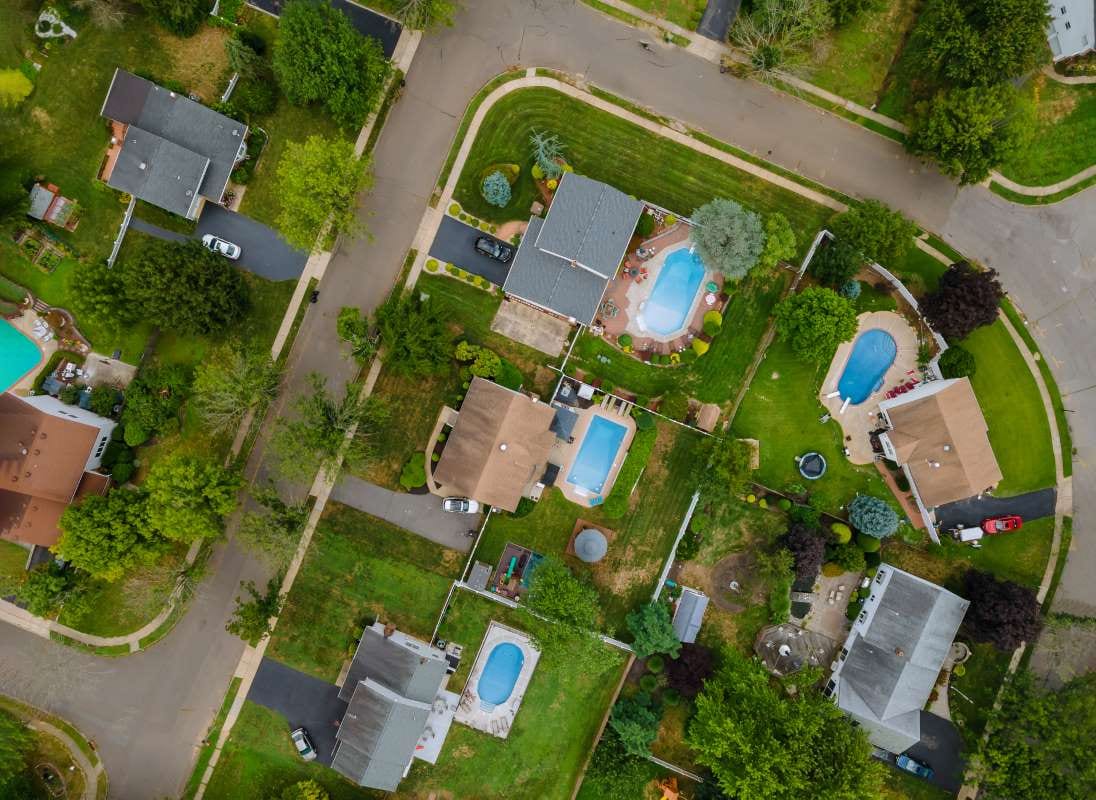
📌 Key Takeaway: Strategic route planning in Tarrant County is the single most controllable lever pool service owners have for cutting costs, increasing daily stops, and building a business that holds its value when it is time to sell or expand.
Why Route Structure Determines Your Profit Margin
Most pool service owners think of route planning as a scheduling exercise, but it is really a financial decision made on a map. Every unnecessary mile you drive eats into margin that could otherwise fund equipment, training, or a second truck. In Tarrant County, where service areas can stretch from Fort Worth's dense urban core to far-flung suburban neighborhoods in Keller, Mansfield, or Burleson, unoptimized routing can quietly cost a solo operator several thousand dollars a year in fuel alone, before factoring in added labor hours.
The math is straightforward. If you service fifty accounts and reduce average travel time between stops by just five minutes, you recapture more than four hours per week. Over a year, that is two hundred-plus hours — enough to add ten to fifteen accounts without hiring additional help, or to finish the day earlier and avoid technician burnout.
A well-structured route also increases your business's resale value. Buyers who browse anchor pay more for routes where accounts cluster tightly, because tight clusters mean predictable drive times and easier onboarding for the new owner.
Mapping Tarrant County's Geographic Realities
Tarrant County covers more than nine hundred square miles, and the traffic patterns do not behave the same way across all of them. Interstate 30, Loop 820, and TX-121 can back up substantially during morning and mid-afternoon windows. A route that looks efficient on paper — running accounts from east Fort Worth into Euless and then back southwest to Crowley — can lose an hour to congestion if the sequence is not timed around those corridors.
Practical tactics for dealing with Tarrant County geography:
- Work neighborhoods in blocks. Resist the urge to schedule by service day alone. Group accounts within a two- to three-mile radius and complete that cluster before moving on.
- Sequence around traffic, not just distance. The shortest path is not always the fastest. Run accounts near heavy commuter corridors early in the morning before congestion peaks, or late morning after it clears.
- Account for pool density by zip code. Zip codes like 76108 (west Fort Worth) and 76036 (Crowley) have higher residential pool density than areas closer to the commercial core. Denser zones let you stack stops more tightly.
- Use satellite imagery before committing to an account. Some Tarrant County subdivisions have access roads, gated entries, or alley-access gates that add hidden time to each visit.
Evaluating Existing Routes Before You Buy
Acquiring an established book of business accelerates growth far faster than organic lead generation, but not all routes are built with the same geographic logic. Before purchasing, ask for a pin-drop map of every account and examine the cluster pattern yourself. Routes that look profitable on a spreadsheet can hide a spaghetti routing problem that costs you hours each week.
Key metrics to request from any seller:
- Average drive time between stops (not just distance)
- Number of accounts within each zip code or neighborhood cluster
- Customer tenure by account — long-tenured customers in tight clusters are the most valuable
- Days and time windows each account is scheduled, to understand how much scheduling flexibility you actually inherit
When evaluating options available through anchor, compare not just account count and monthly billing, but the physical layout of the route. A 40-account route with tight geographic clustering will often outperform a 55-account route scattered across three cities.
Technology That Works for Field Technicians
Route optimization software has become inexpensive and accessible. Tools like OptimoRoute, Route4Me, or even Google Maps with multi-stop optimization can sequence stops dynamically based on current traffic. For a solo operator or small crew in Tarrant County, the practical benefit is most visible on days when a last-minute cancellation or add-on request reshuffles the schedule.
What to look for in a routing tool for pool service:
- Mobile-first interface. Technicians need to view and adjust routes from a phone without logging into a desktop dashboard.
- Customer notes integration. Gate codes, dog warnings, preferred entry points, and chemical preferences should surface automatically when a stop is queued.
- Time-window constraints. Some customers require morning service before noon, or have HOA rules about service vehicles during certain hours. Your tool must respect those constraints rather than override them for a theoretically faster route.
- Completion logging. Every completed stop should generate a timestamp and optional photo. This protects you from billing disputes and creates records that document service value if you ever sell the route.
Scaling from One Route to a Multi-Truck Operation
Tarrant County's growth corridors — particularly along TX-114 near Roanoke and the Alliance area in north Fort Worth — continue adding new residential pools faster than most established operators can organically grow their customer lists. This creates genuine opportunity for operators who plan their route structure with expansion in mind from the start.
The operators who scale most successfully do not simply add accounts to an existing route until it becomes unwieldy. Instead, they design routes as discrete geographic units from the beginning, so that when a route reaches fifty to sixty accounts, it can be handed off cleanly to a second technician or sold as a stand-alone book of business. This approach keeps daily drive times manageable, makes training new technicians straightforward, and preserves the option to exit profitably if circumstances change.
Building this structure takes more discipline in the early months — it is tempting to take any account regardless of location — but the operational and financial payoff compounds significantly over time. In a county with Tarrant County's pool density and population growth, service owners who treat route geography as a core business asset consistently outperform those who treat it as an afterthought.