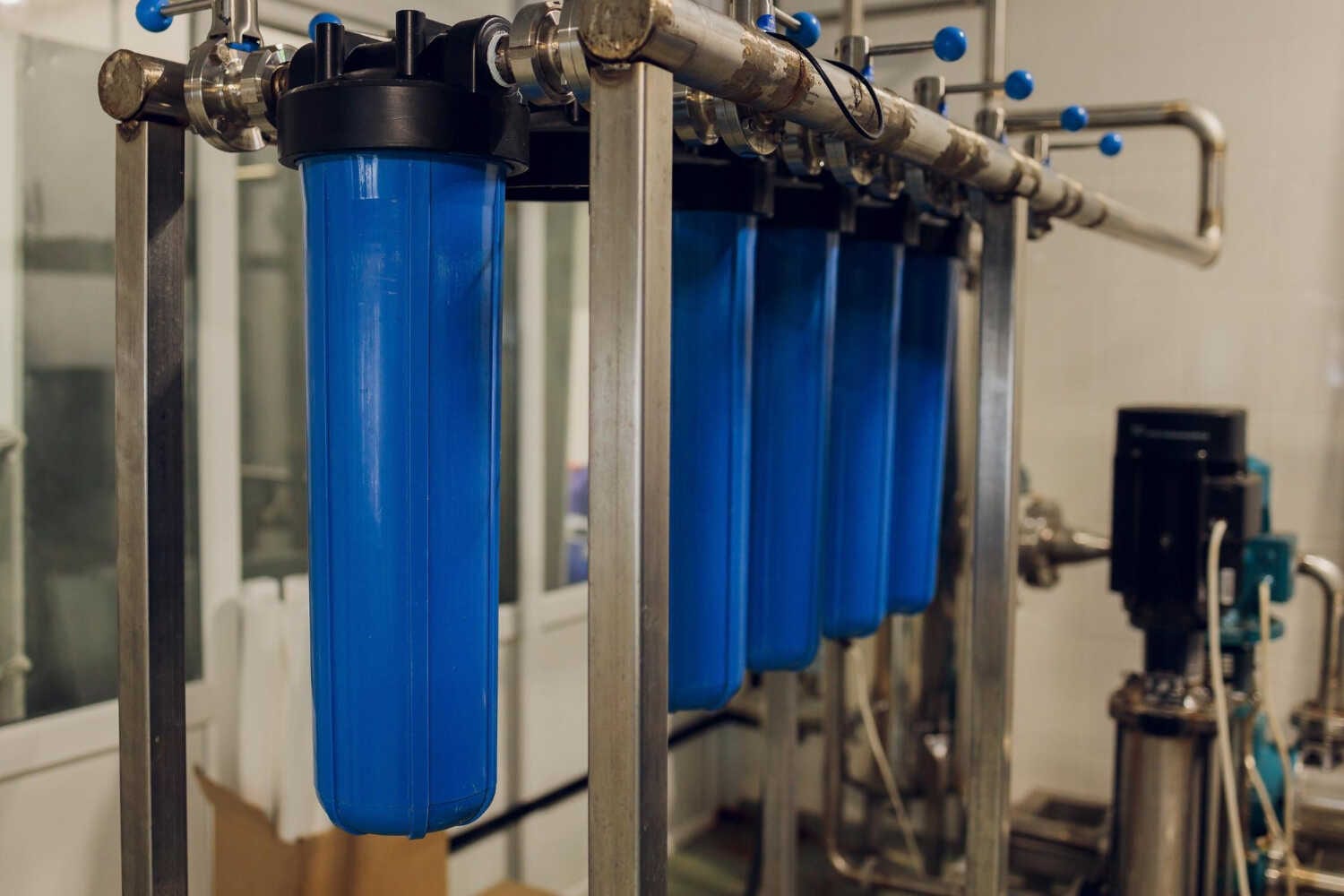
📌 Key Takeaway: Understanding how pool filtration systems work — and which type suits each customer's pool — is one of the most practical skills that separates a thriving pool service business from one that constantly battles callbacks and water-quality complaints.
Why Filtration Science Matters to Pool Service Professionals
Pool service is not just about adding chemicals and skimming leaves. The filtration system is the engine of every pool you maintain, circulating water hundreds of thousands of gallons per season and mechanically removing contaminants before they become a chemistry or health problem. When you understand what is happening inside that filter tank, you diagnose problems faster, recommend upgrades with confidence, and justify your pricing to customers who wonder why they should not just clean the pool themselves.
For technicians who are building or acquiring a customer base — including those exploring pool routes for sale — filtration literacy also helps you assess the health of any route before you buy. A route where half the pools run undersized or neglected filters is a route loaded with future chemistry bills and unhappy customers. Knowing what to look for during a site walk lets you price a route accurately and plan your service schedule from day one.
The Three Main Filter Types and How They Work
Sand Filters
Sand filters push water down through a bed of specially graded silica sand, typically 0.45–0.55 mm in diameter. Particles larger than about 20–40 microns get trapped in the spaces between sand grains. When pressure rises roughly 8–10 PSI above the clean starting pressure, you backwash — reversing flow to flush trapped debris out through a waste line.
Sand filters are durable, inexpensive, and simple to service, making them the most common type you will encounter on a residential route. Their limitation is particle size: anything finer than 20 microns passes right through, which is why a sand-filter pool can test chemically balanced yet still look cloudy. Floc or clarifier additives coagulate fine particles into larger clumps that sand can then capture, a useful trick when a customer calls frustrated about persistent cloudiness.
Cartridge Filters
Cartridge filters route water through pleated polyester fabric with pores in the 10–15 micron range — roughly twice as fine as sand. There is no backwash valve; instead, the cartridge is removed periodically, rinsed with a garden hose, and soaked in a filter cleaner solution to dissolve oils and scale before reinstallation.
From a service route standpoint, cartridge filters are low-water users (no backwash waste), which appeals to customers in drought-prone states. They do require more hands-on cleaning time per service visit than a quick backwash, so factor that into your stop pricing. Cartridges have a finite lifespan — typically two to five years depending on bather load and cleaning frequency — so you should track replacement cycles across your accounts and offer proactive replacement as part of your maintenance package.
Diatomaceous Earth (D.E.) Filters
D.E. filters coat internal grids or fingers with diatomaceous earth, a powder of fossilized microscopic algae skeletons. The jagged microscopic structure filters particles down to 2–5 microns — the finest mechanical filtration available without moving to commercial-grade membrane systems. The result is visibly polished water that customers notice immediately.
Maintenance involves periodic backwashing followed by recharging the grids with fresh D.E. powder through the skimmer. Full teardowns for grid inspection and cleaning are recommended annually. D.E. requires careful handling — respiratory protection during powder application is a non-negotiable safety practice — and disposal of backwash water must follow local regulations because D.E. slurry can clog municipal systems. Despite the extra steps, customers who have experienced a well-maintained D.E. system rarely want to go back, making it a strong upsell for high-value accounts.
Matching Filter Type to Pool and Customer Needs
Choosing the right filter is rarely just a technical decision — it is also a business conversation. Here is a practical framework for advising customers:
- Pool size and bather load: High-traffic pools (vacation rentals, large families) generate more organic load and benefit from the finer filtration of cartridge or D.E. systems.
- Water conservation requirements: In areas with mandatory water restrictions, cartridge filters eliminate backwash waste, a meaningful selling point.
- Customer's tolerance for maintenance involvement: Sand filters are lowest-effort for the customer between visits. D.E. systems require disciplined recharging — if you are not certain a customer will follow through, factor that into your service frequency.
- Budget: Sand systems have the lowest upfront cost. D.E. systems cost more to install and maintain but justify a premium monthly service rate.
Understanding these trade-offs positions you as an advisor rather than just a technician, which is exactly the relationship that builds long-term customer retention and referrals.
Filtration Efficiency and Chemistry Are Inseparable
One of the most common misconceptions among new pool technicians is treating filtration and water chemistry as separate disciplines. In practice they are tightly coupled. A clogged or undersized filter raises combined chlorine levels because organic debris is not being removed fast enough for chlorine to keep up. Conversely, imbalanced pH degrades filter media: acidic water dissolves D.E. grids and corrodes sand filter laterals over time.
When you take over accounts through pool routes for sale, auditing the filtration infrastructure alongside the water chemistry records gives you a complete picture of the route's true condition. Routes where previous operators deferred filter maintenance almost always show a corresponding pattern of elevated chlorine demand — and frustrated customers who have been adding more and more chemical with diminishing results.
Building Filter Expertise Into Your Service Model
Document the filter type, media age, cartridge replacement date, and last D.E. recharge for every account in your route management software. Schedule proactive maintenance rather than waiting for customer complaints. Offer an annual filter deep-clean as an add-on service — it is a high-margin revenue line that most customers will accept once you explain why it matters.
Pool filtration is not glamorous, but it is the foundation every other aspect of water quality is built on. Technicians who master it earn the trust that turns a single account into a decade-long relationship.