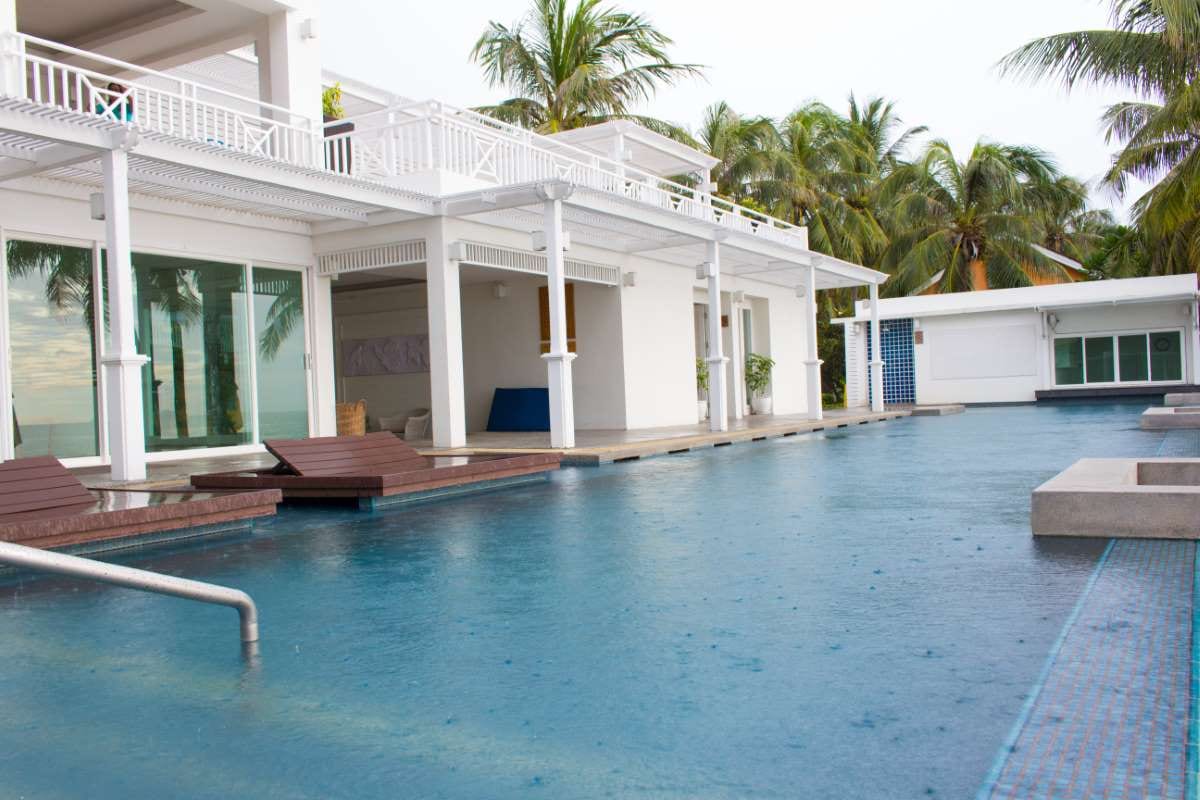
📌 Key Takeaway: Arizona's year-round sunshine and explosive residential growth across San Tan Valley, Maricopa, Casas Adobes, Goodyear, and Yuma make it one of the strongest markets in the country for building a profitable pool service business.
Why Arizona Is a Prime Market for Pool Service Businesses
Few states offer the combination of climate and population growth that makes Arizona so attractive for pool service entrepreneurs. With over 300 sunny days per year, pools are a standard feature of residential life rather than a seasonal luxury. Homeowners rely on regular maintenance year-round, which translates directly into stable, recurring monthly revenue for route owners.
Arizona's five major metros—Phoenix, Tucson, Mesa, Chandler, and their surrounding communities—have seen consistent population gains for two decades. That growth has pushed residential development into previously rural areas, creating entirely new pockets of demand. Cities like San Tan Valley, Maricopa, and Goodyear are prime examples: master-planned communities packed with single-family homes, each with a pool that needs weekly service.
For anyone considering pool routes for sale in Arizona, the timing has rarely been better. Entry-level accounts are available, pricing structures are transparent, and a proven support system can get a new operator running within weeks.
Breaking Down the Five Key Markets
San Tan Valley sits in Pinal County with a population topping 100,000. The community has grown almost entirely through residential construction, which means a high density of newer homes—and newer pools. Demand for professional maintenance in this market is consistent, and the sheer volume of developments means account availability remains strong.
Maricopa, also in Pinal County, was incorporated in 2003 and has grown rapidly since. With nearly 70,000 residents and continued expansion driven by its proximity to the Phoenix metro, Maricopa offers a concentrated pool of residential accounts. Operators here often build dense, geographically efficient routes that minimize drive time between stops.
Casas Adobes is an unincorporated community in Pima County on the northwest edge of Tucson. The population of roughly 70,000 skews toward established, higher-income households. Pools in this area tend to be well-maintained and clients have historically low turnover, which supports long-term account retention. For a route owner focused on Tucson's northern suburbs, Casas Adobes is a reliable anchor.
Goodyear in Maricopa County is one of the Phoenix metro's fastest-growing cities. With close to 100,000 residents and a pipeline of new residential projects, Goodyear represents strong short- and long-term potential. Healthcare and manufacturing employers have drawn a working population that values professional home services, including pool maintenance.
Yuma stands apart from the other four markets in character but not in opportunity. As the largest city in Yuma County with over 135,000 residents, it has a hot desert climate that pushes pool usage—and maintenance needs—to nearly year-round levels. Agriculture, military, and tourism all contribute to a diverse local economy, and pool service businesses here benefit from both residential and commercial accounts.
What to Look for When Evaluating a Route
Not all routes are created equal, and due diligence before purchasing is critical. Here are the most important factors to assess:
Account density. A route with 30 accounts spread across 40 miles of desert highway is far less efficient than 30 accounts within a five-mile radius. Before committing, map the accounts and calculate your realistic drive time per day.
Monthly billing total. This is the core metric that determines route value. Standard industry pricing pegs a route at six to seven times the monthly billing total, depending on account count. Knowing this number lets you evaluate whether the asking price is fair and estimate your return timeline.
Customer tenure and cancellation history. Newer accounts in fast-growing subdivisions carry more churn risk than well-established customers who have used the same service for years. Ask for historical cancellation data before signing.
Equipment and pool types. Routes that mix basic residential pools with older or non-standard equipment can increase your service time per stop. Newer developments with modern pool systems are generally faster to maintain.
How Superior Pool Routes Structures Its Offering
Superior Pool Routes has been operating for nearly 20 years and has sold more than 20,000 accounts across Arizona, Florida, Texas, Nevada, and California. Their pricing model is straightforward: 40 or more accounts are priced at 6 times monthly billing, 30–39 accounts at 6.5 times, and 20–29 accounts at 7 times. That puts their routes at roughly half what buyers typically pay on the open market.
The onboarding process is designed to reduce startup friction. After selecting a city or zip code and choosing account count, a purchase order is signed and account transfer begins within about two weeks. All accounts are typically transferred within 60 days.
Training is included and covers pool chemistry, equipment systems, and cleaning technique—both in-field and virtually based on location. A warranty covers account replacement if accounts are lost for reasons outside the operator's control, and strategy sessions are available for routes experiencing higher-than-expected cancellations.
For operators comparing their options, reviewing pool routes for sale with a clear understanding of what's included in training and support can make a significant difference in the first year of operation.
Getting Started in the Arizona Pool Service Market
The practical steps to owning a route in any of these five Arizona markets are manageable. You do not need a large team to start—most new operators run their first routes solo before hiring additional technicians as the business grows. You will need a reliable truck, basic pool service equipment, chemical supplies, and a working knowledge of pool systems (which the training program provides).
Licensing requirements in Arizona for pool service work are relatively accessible compared to other states, but it is worth verifying current requirements with the Arizona Registrar of Contractors before purchasing accounts that include equipment repair or installation work.
The combination of climate, population growth, and a supportive acquisition structure makes Arizona one of the most sensible states in the country to start or expand a pool service business. Whether your target is a dense suburban route in Goodyear, an affluent neighborhood in Casas Adobes, or a high-volume market in Yuma, the fundamentals are in your favor.