📌 Key Takeaway: Mastering water chemistry, equipment diagnostics, customer communication, and route management gives pool service entrepreneurs the foundation they need to build a profitable and lasting business.
Why Technical Knowledge Is Your Most Valuable Asset
Pool service is a hands-on trade. Before you can run a profitable business, you need to understand what you're working with every time you show up at a job site. That means getting comfortable with the major components of a pool system: pumps, filters, heaters, chlorinators, and automated cleaners.
A pump that cycles water efficiently keeps everything downstream working correctly. When a pump fails or runs dry, the whole system suffers. Knowing how to identify a failing capacitor, check for air leaks in the suction line, or diagnose an impeller clog puts you ahead of most competitors who only know how to swap parts. Similarly, understanding the difference between sand, cartridge, and DE filters — and knowing the correct backwash and cleaning intervals for each — prevents costly equipment failures for your clients.
Heaters and salt chlorine generators are increasingly common in both residential and commercial pools. Entrepreneurs who can service these systems in-house avoid having to subcontract the work, which protects margin and builds customer trust. Spend time early in your career learning how each system type behaves across different weather conditions, because a heater that works fine in Florida summers can behave very differently during a cool snap.
Water Chemistry: The Non-Negotiable Skill
Poor water chemistry is the number one reason customers switch pool service companies. If the water looks bad, smells bad, or irritates swimmers' eyes and skin, no amount of friendly service will keep that client long-term.
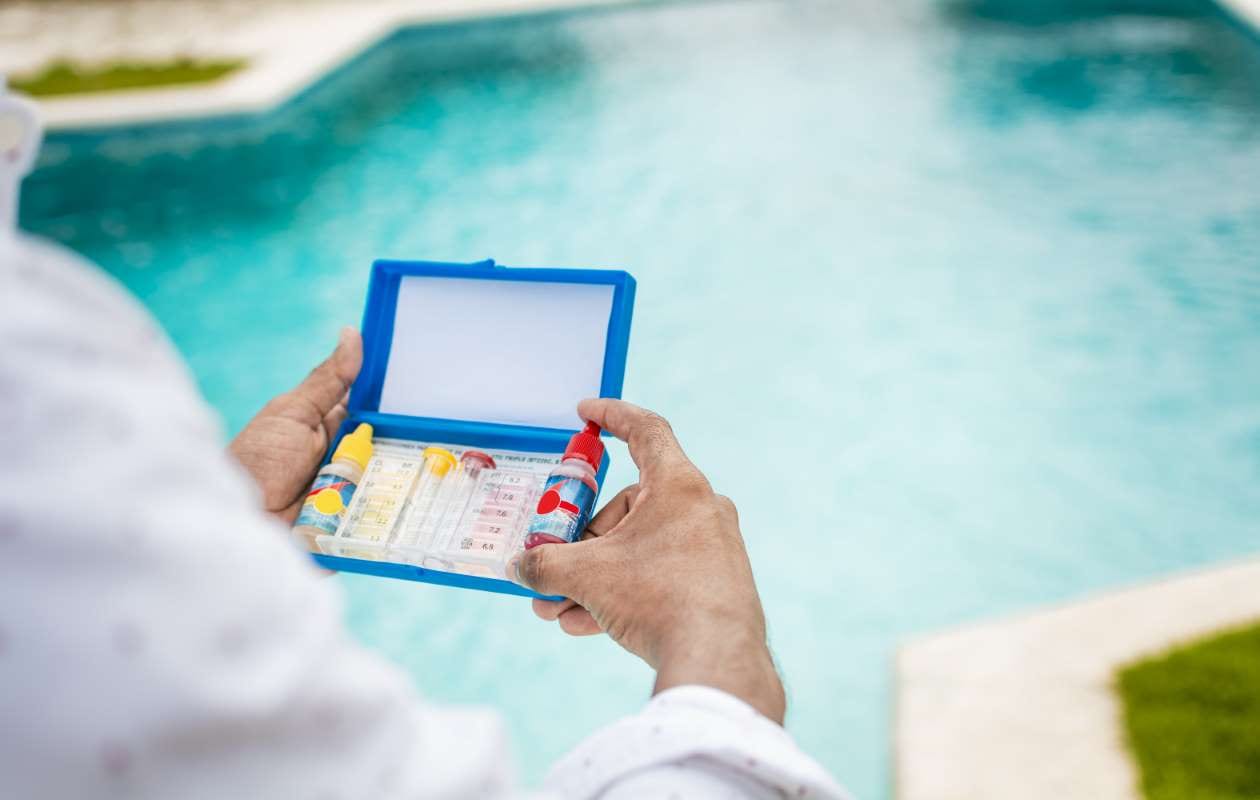
Every service visit should include testing and adjusting at least four parameters:
- pH — Keep it between 7.2 and 7.8. High pH reduces chlorine effectiveness; low pH corrodes equipment and irritates skin.
- Free chlorine — The active sanitizer. Residential pools typically need 1–3 ppm; commercial pools often require more.
- Total alkalinity — Acts as a pH buffer. Target 80–120 ppm. Low alkalinity causes pH to swing wildly; high alkalinity makes pH hard to lower.
- Calcium hardness — Protects plaster and tile from pitting or scaling. Target 200–400 ppm depending on the surface type.
Beyond the basics, learn to recognize the early signs of algae blooms, phosphate buildup, and cyanuric acid saturation. Stabilizer (cyanuric acid) that climbs above 100 ppm makes chlorine significantly less effective — a condition called chlorine lock. Knowing how to dilute or address this proactively saves you emergency service calls and unhappy customers.
Carry a quality digital tester and a backup colorimetric test kit. Relying on a single testing method is a liability. Document results at every visit so you have a history to reference if a customer questions your work or if a problem develops over time.
Customer Communication Builds the Business
Technical skill gets the job done, but communication is what earns referrals and long-term contracts. Pool service customers generally are not experts — they rely on you to interpret what you're seeing and explain it clearly without being condescending.
After each service visit, send a brief summary of what was done, any chemical adjustments made, and anything you noticed that might need attention in the coming weeks. This can be as simple as a text message or a short note left at the door. Customers who feel informed are far less likely to shop around.
When problems arise — and they will — be the first to call. If you discover a failing pump seal or a crack in a return fitting, contact the customer before they notice it themselves. This positions you as a proactive protector of their investment rather than someone who fixes things only after being called. That distinction is worth more than any discount you could offer.
Set clear expectations about your service schedule and stick to them. Showing up on the same day each week, at a consistent time, signals reliability. If something comes up that forces a schedule change, notify the customer in advance.
Route Management and Operational Efficiency
As your business grows, managing a large number of accounts efficiently becomes a competitive advantage in itself. A poorly organized route costs time, fuel, and customer satisfaction.
When you're ready to expand your account base, looking at pool routes for sale is one of the fastest ways to add established customers without starting from scratch. Acquiring an existing route gives you immediate cash flow and a proven service history — two things that are difficult to build quickly on your own.
Once you have a route, optimize it geographically. Group accounts by neighborhood so you're spending more time servicing pools and less time driving between them. Route management software can help here: most platforms let you drag and drop stops to find the most efficient sequence, track service completion, generate invoices, and store chemical logs for each account.
As you grow beyond what you can handle solo, hiring and training technicians becomes essential. Build written service checklists and chemical documentation procedures from day one. This makes onboarding new employees faster and ensures consistent quality across your entire route — not just the accounts you personally service.
Training and Certification: Investing in Credibility
The pool industry has no universal licensing requirement in most states, but certifications from organizations like the Pool and Hot Tub Alliance (PHTA) demonstrate a serious commitment to quality. Certified Pool Operator (CPO) and Certified Pool-Spa Inspector credentials carry real weight with commercial accounts, HOAs, and property managers who need to show due diligence.
Beyond formal credentials, hands-on in-field training in your specific region is invaluable. Water chemistry, algae pressure, and equipment wear patterns vary significantly between climates. A technician trained in Phoenix needs to adjust their approach when servicing pools in coastal markets where salt air accelerates equipment corrosion.
If you're evaluating whether to purchase an existing route or build from scratch, reviewing what's available through pool routes for sale gives you a realistic picture of what established businesses in your target market look like, what accounts are worth, and what kind of ongoing training support is available.
Putting It All Together
Pool maintenance entrepreneurship rewards people who combine technical depth with business discipline. Master your chemistry, know your equipment cold, communicate clearly with every customer, and build operational systems that can scale. Those four pillars — technical skill, water chemistry, customer service, and route management — separate businesses that stagnate from those that grow year after year.
The learning curve is real, but it is manageable. Focus on one skill area at a time, document what you learn, and invest in training that matches your specific market. The pool industry has room for operators who take quality seriously — and customers who find one they trust tend to stay for years.