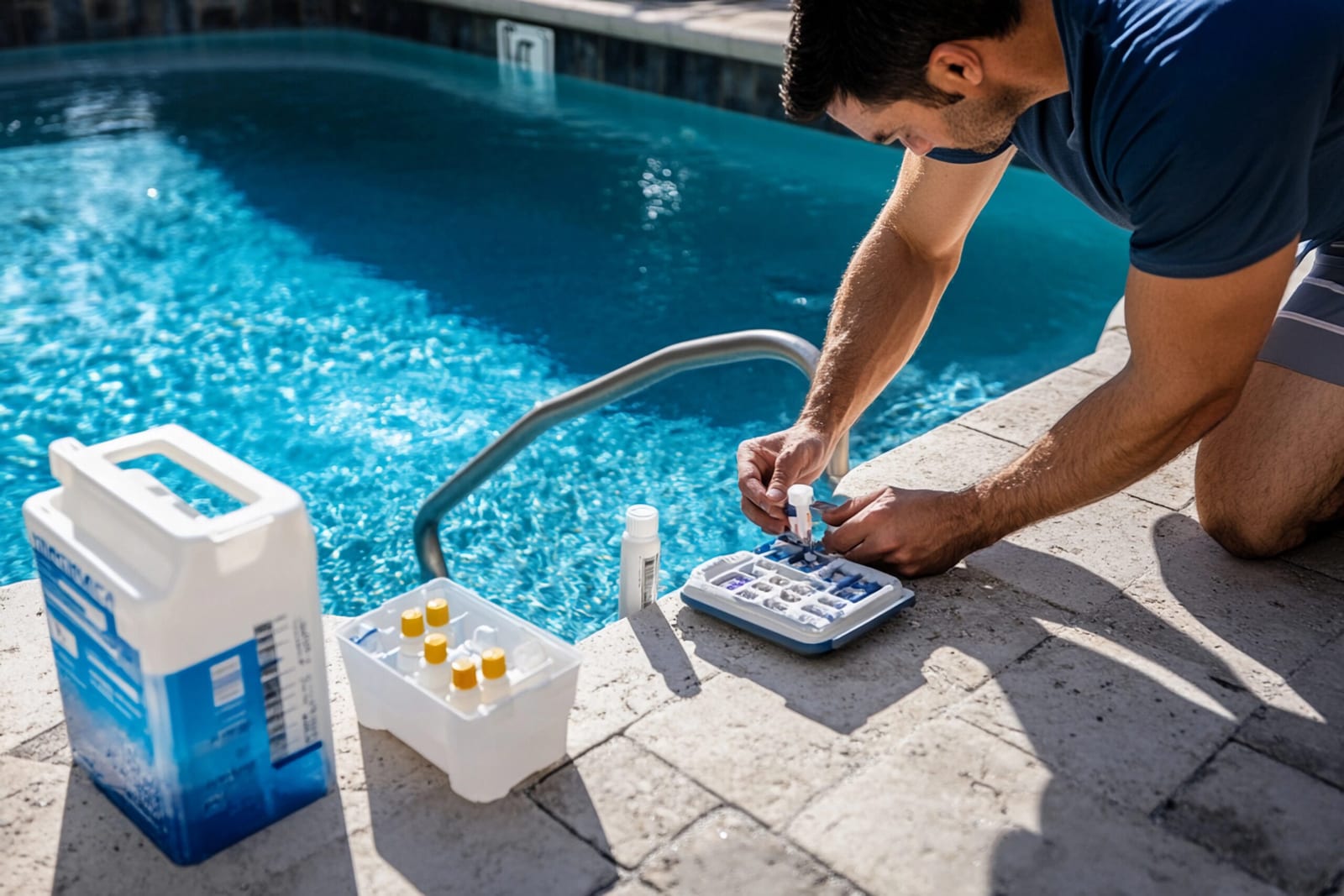
📌 Key Takeaway: Switching to variable-speed pumps is one of the highest-ROI equipment upgrades a pool service business owner can make, cutting energy costs by up to 90% while extending equipment life and attracting eco-conscious clients.
Why Variable-Speed Pumps Are a Game-Changer for Pool Service Professionals
If you operate a pool service business, every dollar spent on electricity is a dollar that shrinks your profit margin. Traditional single-speed pumps run at full throttle around the clock, whether the pool needs it or not. Variable-speed pumps (VSPs) solve that problem by adjusting motor speed to match actual demand. The result, according to the U.S. Department of Energy, is energy savings of up to 90% compared to single-speed models.
That figure is not a marketing claim — it is physics. Because power consumption scales with the cube of motor speed, cutting pump speed in half does not cut energy use in half; it reduces it to one-eighth of full-speed consumption. Run a pool at 60% speed for most of the day and only ramp up for backwashing or heavy circulation, and the utility bill shrinks dramatically. For a service tech running 50, 100, or 200 accounts, those savings compound fast — both for your clients and, when you own accounts outright, for your own bottom line.
Understanding the Real Cost Difference
The sticker price of a variable-speed pump is higher than a single-speed unit, typically $600–$1,200 installed versus $300–$600 for a standard pump. That gap is the first objection you will hear from clients. Your response should focus on payback period, not upfront price.
A pool running a 1.5 HP single-speed pump at roughly $0.13 per kWh can spend $500–$800 per year in electricity just for circulation. A comparable VSP running optimized schedules routinely cuts that to $80–$150 per year. The Electric Power Research Institute documented average five-year savings of $1,500 per pool. At that rate, most clients recover the premium cost within 12 to 18 months and then bank the savings indefinitely.
For service businesses, there is a secondary financial benefit: VSPs run quieter and cooler, which translates to longer motor life, fewer warranty calls, and lower parts replacement frequency. A motor that runs 30% cooler can last twice as long. Fewer emergency calls mean lower labor overhead and higher customer retention.
How to Evaluate Pumps for Each Account
Not every pool is the same, and a one-size-fits-all approach will leave money on the table. When assessing a pool for a VSP upgrade, consider the following:
- Pool volume and turnover requirements. Larger pools or those with high bather loads need faster turnover rates during peak hours. A VSP lets you program high-speed cycles during those windows and drop to whisper speeds overnight.
- Existing plumbing and filter type. Oversized piping reduces friction loss, which lets the pump run at even lower speeds. Undersized pipes cap the benefit.
- Local utility rate schedules. Many utilities charge more per kWh during peak demand hours. Programming the pump to run faster during off-peak hours and slower during peak hours layers an additional savings strategy on top of baseline efficiency gains.
- State and utility rebates. California, Florida, Texas, and several other states mandate VSPs on new residential pools and offer rebates on upgrades. Knowing your market's incentive landscape helps you close the conversation faster.
Selling the Upgrade to Clients
Pool owners are not engineers, so leading with kWh reductions will not move the needle. Lead with the dollar number on their utility bill and the payback timeline. A simple one-page comparison — current estimated annual cost versus projected cost with a VSP — does most of the selling for you.
Pair that with the noise reduction angle. Single-speed pumps are loud. VSPs running at low speed are nearly silent. Homeowners with outdoor living spaces notice and appreciate the difference immediately, which builds goodwill and reduces churn.
For clients who are skeptical about the upfront investment, consider offering a performance guarantee: if they do not see a meaningful reduction in their first full billing cycle after installation, you will work with them to adjust programming. That level of confidence signals expertise and builds the kind of trust that generates referrals.
Building VSP Expertise Into Your Business Model
Service businesses that develop deep VSP expertise gain a durable competitive advantage. Knowing how to program controllers, troubleshoot drive faults, and optimize speed schedules for different pool types is a skill set that justifies premium service rates. It also opens upsell opportunities during every routine visit — chemistry check leads to equipment conversation leads to a VSP proposal.
If you are looking to grow your client base rather than build it account by account from scratch, acquiring an established route accelerates that path. You can explore pool routes for sale to find accounts that are already generating revenue and are prime candidates for equipment upgrades that will increase both client satisfaction and your service margins.
Maintenance, Monitoring, and Long-Term Performance
Installing the pump is only the beginning. VSPs with built-in smart controls allow remote monitoring via smartphone apps or building management systems. That connectivity means you can adjust programming between site visits, respond to alerts before a client notices a problem, and log performance data that proves the energy savings over time.
Schedule a programming review every six months to realign speed curves with seasonal usage patterns. Summer schedules with higher bather loads require different settings than winter maintenance mode. A well-programmed pump maintained on a consistent schedule will outperform a neglected one regardless of how sophisticated the hardware is.
The Bottom Line for Pool Service Business Owners
Variable-speed pumps represent one of the clearest win-win upgrades in the pool industry. Clients cut their electricity bills significantly, equipment lasts longer, and service businesses that lead with VSP expertise command higher rates and stronger client loyalty. The technology is proven, the savings are documented, and the regulatory environment in most states is moving toward VSP mandates anyway — getting ahead of that curve now positions your business as the expert rather than the follower.
Whether you are servicing 10 pools or 300, integrating VSP recommendations into your standard account review process is a straightforward way to add value, increase referrals, and differentiate your business. And if you want to scale your pool service operation quickly with an established client base ready for exactly these kinds of upgrades, take a look at pool routes for sale and see what is available in your market today.