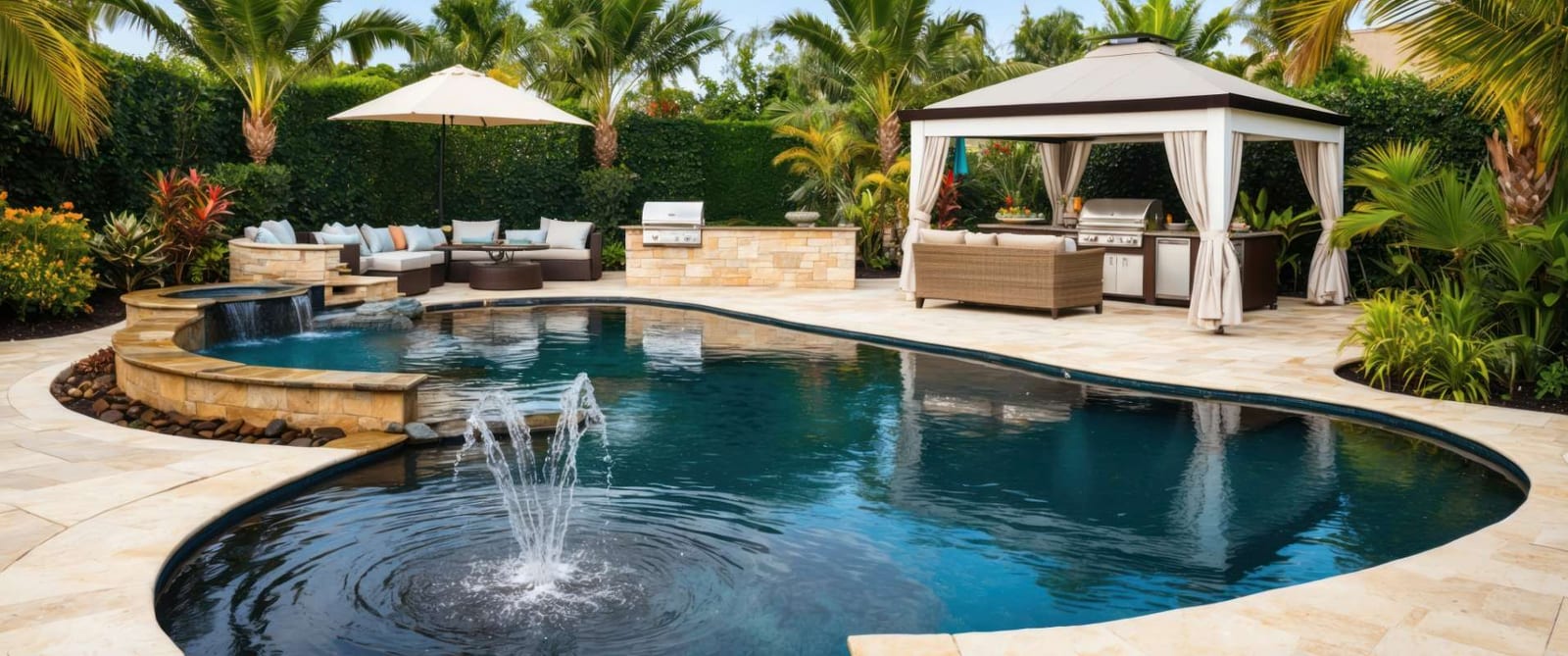
📌 Key Takeaway: Launching a pool service in San Diego, Salinas, Tracy, Santa Cruz, or Vacaville works best when you pair tight route density with predictable monthly billing, the right chemical-handling licensing, and a clear plan for acquiring your first 40 stops within 90 days.
Why California's Mid-Sized Cities Reward New Pool Operators
The five cities in this article each have a different demographic and pool inventory, but they share one thing: enough density to build a tight, profitable route without competing head-to-head with the legacy operators who dominate Orange County and the Phoenix valley. San Diego County alone has roughly 188,000 residential pools, while Vacaville and Tracy have seen new-build subdivisions add gunite and vinyl-liner installations through the post-2020 housing wave. Salinas and Santa Cruz lag in pool count per capita, but turnover is slower and customer loyalty is higher once you earn it. If you are weighing whether to build from scratch versus acquire existing stops, browse current listings on our California pool routes for sale page to benchmark what established accounts trade for in each county.
Licensing, Insurance, and the C-61/D-35 Question
California treats pool service as a limited specialty trade. For routine cleaning, water balancing, and minor equipment swaps, you do not need a CSLB contractor's license, but the moment you cut into plumbing, replace a heater, or install a pump valued over $500 in total job cost, you cross into C-61/D-35 territory. Get the license filed before you scale past 30 accounts; otherwise you will be turning down the most profitable repair work or quietly violating Business and Professions Code 7028. Pair it with a $1 million general liability policy (expect $600 to $1,100 per year for a one-truck operation), commercial auto on your service vehicle, and workers' comp if you bring on even a single helper. Counties differ on business license fees: Santa Cruz runs about $145 annually, San Diego closer to $50, and Tracy bundles it into a flat $108. File for a seller's permit through the CDTFA so you can purchase chemicals wholesale and collect sales tax on parts.
Pricing That Works in Each Market
Pricing varies more by ZIP code than by city. In coastal San Diego neighborhoods like La Jolla, Del Mar, and Carmel Valley, monthly service runs $165 to $225 with chemicals included. Inland in El Cajon or Santee, expect $130 to $165. Salinas and the surrounding Monterey County market sit in the $140 to $175 range, with the Pebble Beach and Carmel corridor pulling $200-plus. Tracy and Vacaville track closely at $135 to $170 monthly because both cities are commuter markets where customers compare prices against Stockton and Fairfield operators. Santa Cruz is the outlier: pools are scarce, but the customers who have them tend to pay $180 to $230 because the labor pool is thin and travel distances are longer. Build your route quotes off a per-pool weekly time of 18 to 22 minutes and target $55 to $70 per service hour after chemical cost.
Equipment Stack for Your First Truck
You do not need a custom service body to start. A used Toyota Tacoma or Ford Ranger with a leaf gulper, a Pentair manual vac head, two telescoping poles, a 360-degree leaf rake, a tile brush, a nylon brush, a salt-cell cleaning bucket, and a Taylor K-2006 test kit will run you under $1,800 in tools. Add a chemical tote system with separate carboys for muriatic acid, liquid chlorine, and cyanuric acid; never mix tri-chlor tabs with cal-hypo in the same compartment. Budget $400 to $600 for a startup chemical inventory. The single best upgrade after month three is a Pool360 or Skimmer account for billing and route optimization, which will pay for itself once you cross 25 stops.
Acquiring Your First 40 Customers
Cold door-knocking still works in Tracy and Vacaville because the subdivisions are newer and homeowners are actively shopping for services. In San Diego and Santa Cruz, lean into Nextdoor, Google Local Service Ads, and referral partnerships with pool builders, real estate agents, and home inspectors. Salinas responds best to bilingual flyers and Spanish-language Facebook ads; roughly 75 percent of Salinas residents identify as Hispanic or Latino, and your marketing should reflect that. A faster path is to buy an established book of business from a retiring operator. We work with sellers across all five cities; current inventory and pricing are listed on our pool routes for sale page, with most accounts trading at 10 to 12 times monthly recurring revenue.
Operations: Density, Routing, and Retention
Profitability in this business is a function of stops per hour, not price per stop. A San Diego operator running 8 to 10 stops daily within a 6-mile radius will out-earn a Tracy operator running the same stops spread across 15 miles. Cluster your accounts aggressively, even if it means turning down work in adjacent ZIPs during your first year. Build a Tuesday-through-Friday service schedule and reserve Mondays for equipment repairs and make-up visits; this single change reduces customer churn by roughly 20 percent because storm-related rescheduling no longer cascades through your week. Communicate every visit through a service report photo and a brief chemistry note. Customers who receive a weekly update text cancel at less than half the rate of customers who only hear from you when there is a problem.
Scaling Past the One-Truck Stage
The jump from solo operator to two-truck shop is harder than the jump from zero to one. Wait until you have 70 to 80 accounts and a four-week cash buffer before hiring. Pay your first technician $22 to $26 per hour in San Diego and Santa Cruz, $19 to $23 in Salinas, Tracy, and Vacaville. Track gross profit per truck weekly, and replace any account that drops below your minimum service margin within 60 days. The operators who thrive in these five California markets are the ones who treat the business as a recurring-revenue operation rather than a cleaning service: tight routes, predictable billing, documented chemistry, and a clean handoff plan for the day they decide to sell.