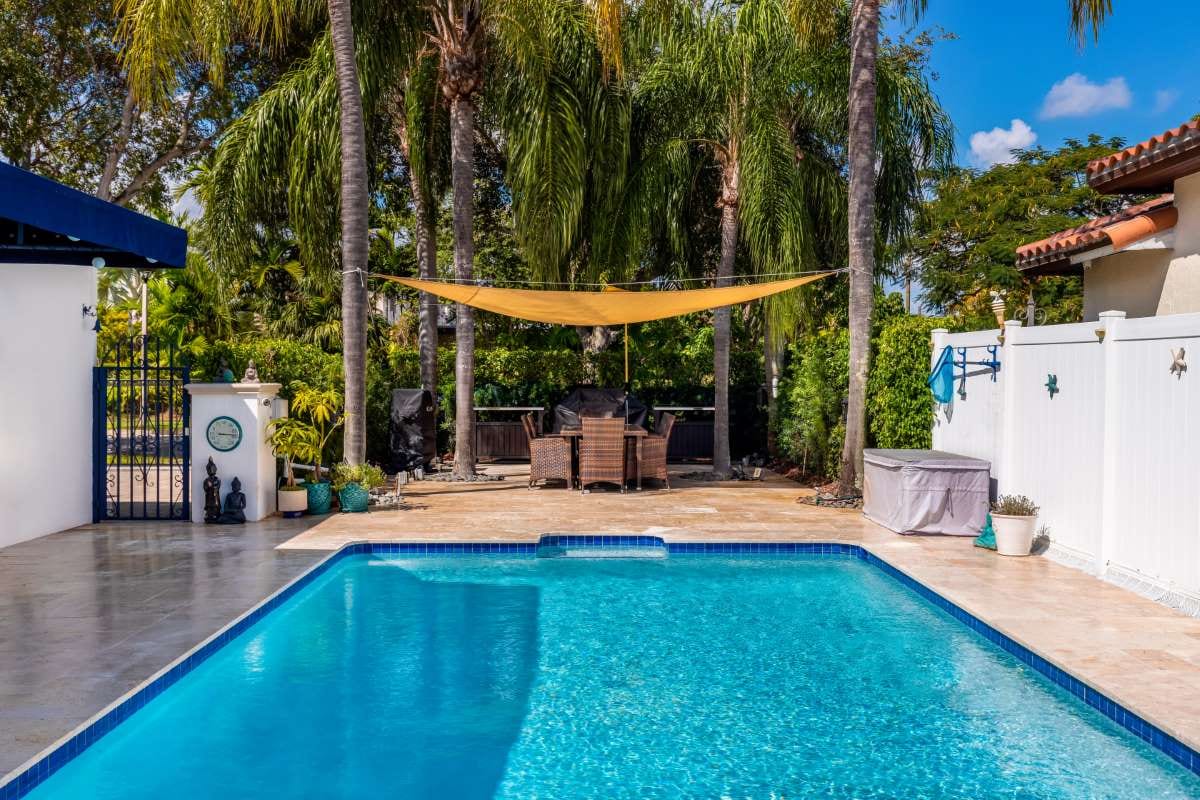
📌 Key Takeaway: Launching a pool service across Bradenton, Fort Lauderdale, Wellington, Jensen Beach, and Apopka requires the right licenses, route density planning, chemistry training, and a realistic pricing model — or you can skip the cold-start by acquiring a pre-built route with warrantied accounts.
Why These Five Florida Markets Reward New Pool Service Operators
Each of these cities has a different customer profile, and your business plan should reflect that. Bradenton (Manatee County) leans toward retirees and seasonal residents who want predictable, low-friction monthly billing. Fort Lauderdale brings dense year-round demand and a heavy concentration of saltwater systems that need cell inspections and chlorine output testing. Wellington has equestrian estates with oversized pools, spas, and water features — accounts that bill at the top of the price band but require longer stop times. Jensen Beach on the Treasure Coast has a mix of older plaster pools that need brush-heavy service, and Apopka outside Orlando is a fast-growing screen-enclosure market where green-to-clean conversions are common after summer storms.
Translate that into route design: aim for 8 to 12 stops per day within a 12 to 15 mile radius. Spreading thin across two counties on day one will erode your margin in fuel and windshield time before you ever see a profit.
The Licensing and Insurance Checklist You Cannot Skip
Florida does not require a state pool service contractor license for basic cleaning and chemical maintenance, but the moment you touch equipment repair, plumbing, or electrical you cross into RP (Residential Pool/Spa Servicing Contractor) or CPC (Certified Pool Contractor) territory regulated by the DBPR. Plan your scope of work accordingly.
At minimum, secure the following before your first paid stop:
- A Florida LLC or sole proprietorship registered with Sunbiz, plus an EIN from the IRS.
- A local business tax receipt in each city you service (Bradenton, Fort Lauderdale, Wellington, Jensen Beach, and Apopka all issue these separately).
- General liability insurance of at least $1,000,000 per occurrence — most HOA-managed communities in Wellington and Fort Lauderdale will ask for a certificate before letting you through the gate.
- Commercial auto coverage on your service vehicle. Personal auto policies exclude business use and will deny claims.
- A CPO (Certified Pool Operator) certification if you intend to service any commercial pools, HOA pools, or short-term rentals.
Equipment Spend: What Actually Belongs in the Truck
A common new-operator mistake is overspending on gear that sits in the garage. Start lean and add as accounts justify it.
Core kit: a telescopic pole with leaf rake and vacuum head, two nylon brushes (one stainless for plaster), a DPD or Taylor K-2006 test kit (test strips are not accurate enough for billing decisions), a tile brush, a pumice stone, and a five-gallon bucket per truck. Add a salt cell cleaning station with muriatic acid handling, a portable filter cleaner, and a cordless drill for pump basket lids.
Chemicals to keep stocked: liquid chlorine (10% to 12.5%), muriatic acid, sodium bicarbonate, calcium chloride, cyanuric acid, and a phosphate remover. Buying cal-hypo tablets in bulk for Apopka and Jensen Beach saves real money over single-store retail.
Skip on day one: robotic cleaners (let the customer own those), pressure washers, and acid-wash trailers. Those are upsell tools for year two.
Pricing That Holds Up Through August
The Florida market in 2024 to 2026 supports residential monthly rates between $135 and $225 for weekly chlorine service, with saltwater pools at the higher end because of cell wear and acid demand. Spas add $25 to $45. Always price chemicals as included — customers reject pass-through chemical billing and your competitors do not use it.
Build your route revenue target around a $9,000 to $12,000 monthly gross per technician before you add a second truck. That math assumes roughly 55 to 70 stops per week at an average of $165. If your average drops below $140, your route is either too spread out geographically or under-priced for the pool size.
For operators who want to bypass the 12 to 18 month ramp, exploring pool routes for sale in Florida gives you immediate cash flow on accounts that already pay at market rate.
Winning Your First 30 Accounts
Door-to-door flyering in pool-dense neighborhoods still works in Florida, especially in Wellington's gated communities (with permission) and Apopka's newer subdivisions. Pair it with three digital fundamentals: a Google Business Profile with weekly photo updates, service-area pages on your website for each city, and a Nextdoor presence in the neighborhoods you actually want to service.
Referral partnerships outperform paid ads in this industry. Build relationships with three categories: pool builders (they hand off warranty service work), real estate agents (closing-day pool inspections), and screen repair companies in Apopka and Jensen Beach where storm damage drives recurring overlap.
Charge a startup or "first service" fee of $95 to $150 on every new account. It covers your initial chemistry balance and signals that you run a professional operation.
Customer Retention Is Where the Money Lives
Acquiring an account costs roughly four to seven times what it costs to keep one, so build retention into your operating routine from day one. Photograph every service stop and send a brief report with chemistry readings — customers in Fort Lauderdale and Wellington especially value the documentation. Respond to texts within four business hours. Never miss a scheduled day without a same-day reschedule notice; one no-show is the most common reason customers fire a pool guy.
Set price increases on an annual schedule (5% to 8% each February works well), communicate them 30 days in advance, and grandfather long-term loyal accounts at a slight discount to reduce churn.
When Buying a Route Beats Building One
If you have capital but limited time, acquisition is often the smarter path. A warrantied route comes with established billing relationships, documented chemistry histories, and trained service patterns. Superior Pool Routes structures every transaction with account replacement warranties — if a transferred customer cancels for reasons outside your control during the warranty window, the account is replaced. To see current inventory across these five cities and the rest of the state, browse the full pool routes for sale listing and filter by territory and monthly billing volume.
Frequently Asked Questions
Do I need a contractor's license to clean pools in Florida?
No, basic cleaning and chemistry service does not require a state license. You will need one if you perform equipment repair, plumbing, or electrical work.
How long until a new route turns a profit?
Most new operators reach break-even at 25 to 35 accounts, typically 8 to 14 months from the first sale if you market consistently.
What is the realistic income on 50 accounts?
At a $165 average, 50 accounts generate roughly $8,250 per month gross. Subtract chemicals (8 to 12%), fuel, insurance, and vehicle maintenance to get your true net.