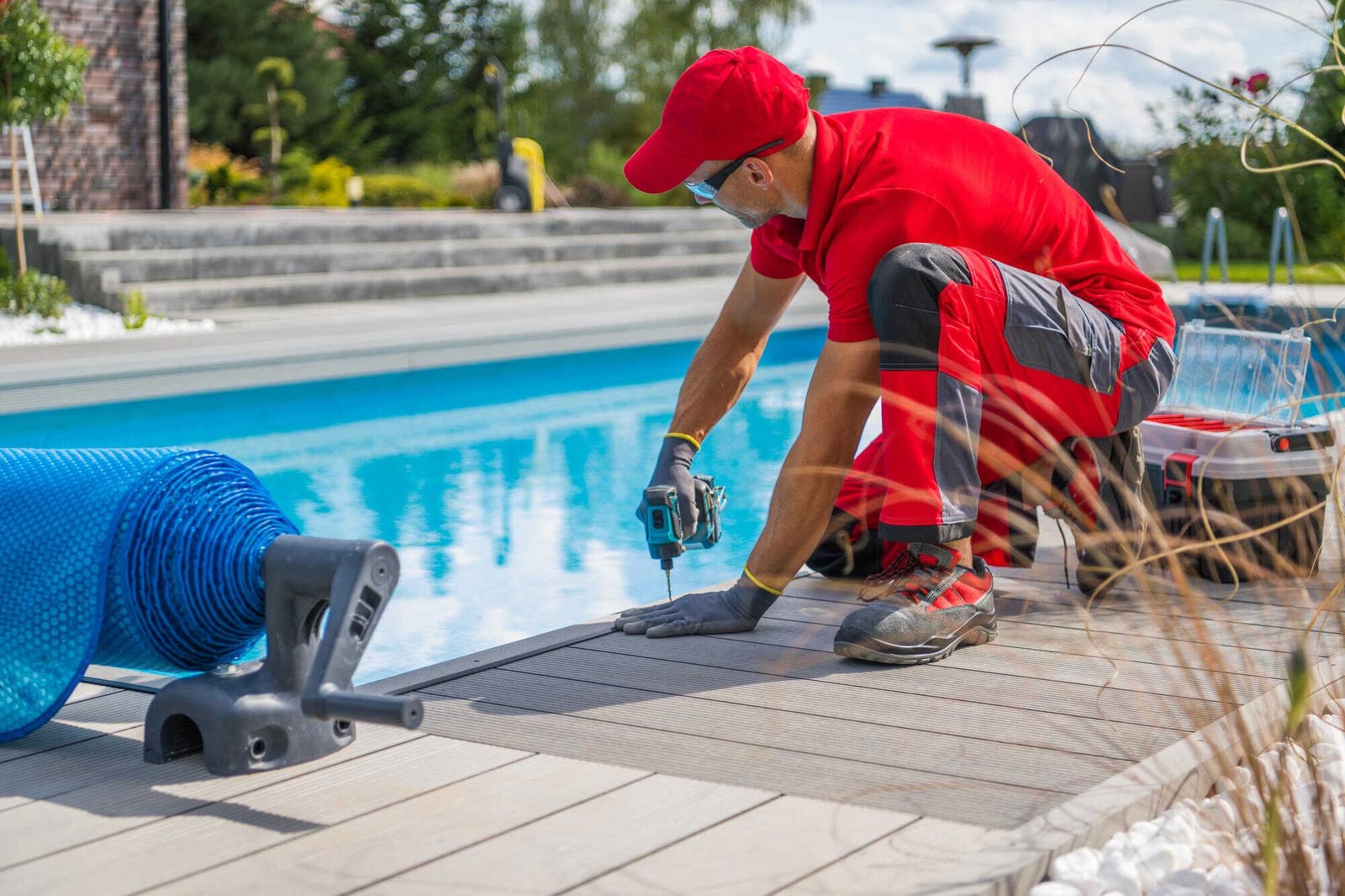
📌 Key Takeaway: Sizing a pool filter correctly to the pool's volume and turnover rate is the single biggest factor in delivering clear water on every stop while protecting your service margin.
Why Filter Sizing Matters to Your Service Business
For a pool service operator, filter sizing is not a theoretical exercise — it is a direct driver of route profitability. An undersized filter forces you to spend extra minutes vacuuming, brushing, and dosing chemicals at every visit, which erodes the per-stop economics that make a route work. An oversized filter, meanwhile, eats into the equipment budget your customer is willing to fund, and can lead to short-cycling on smaller residential pumps. The sweet spot is a filter rated for the pool's actual gallons and turnover needs, sized with enough margin to handle bather load and debris without forcing constant cleanings. When you build that intuition across an entire book of customers, your routes get faster, callbacks drop, and chemical costs become predictable.
The Three Filter Types You Will Encounter on Route
Out in the field, you will run into three filter media types, and you need to be comfortable sizing all of them. Sand filters are the workhorse of residential pools — durable, forgiving, and easy to backwash, but they filter only down to roughly 20–40 microns. Cartridge filters trap finer particles (10–15 microns), conserve water because they do not require backwashing, and tend to be the default on newer builds in water-restricted areas. Diatomaceous earth (DE) filters offer the finest filtration at 3–5 microns, producing showroom-clear water, but they demand more labor: tearing down the grids, recharging the DE through the skimmer, and disposing of spent media. Knowing which media a customer has — and the filter's published square footage or grid area — is step one before you ever quote a replacement.
Running the Math: Volume, Turnover, and Flow Rate
Every sizing decision starts with pool volume. For a rectangular pool, multiply length by width by average depth by 7.48 to get gallons. A 16 by 32 pool with a 5-foot average depth holds about 19,148 gallons. Freeform pools call for a multiplier of roughly 5.9 instead of 7.48 to account for the rounded shape. Once you have volume, divide by the desired turnover time — typically 8 hours for residential pools and 6 hours for commercial — to find the required gallons per hour, then divide by 60 for gallons per minute. The 19,148-gallon pool needs about 40 GPM to turn over in 8 hours. Always select a filter rated above that minimum so the system can absorb the inevitable losses from long pipe runs, elbows, heaters, and salt cells.
Matching Filter Size to Pool Size in the Field
Once you know the GPM target, translate it into a filter spec your customer can buy and you can service. As a working rule of thumb: pools under 15,000 gallons do well with a 100–150 square foot cartridge or a 19-inch sand filter; pools from 15,000 to 30,000 gallons should run on a 200–320 square foot cartridge or a 24-inch sand filter; and anything above 30,000 gallons usually needs a 420–520 square foot cartridge or a 30-inch sand filter. Match the filter to the pump's design flow rate as well — a pump that pushes more GPM than the filter is rated for will channel through the media, shortening element life and worsening water clarity. If you are evaluating routes through our pool routes for sale listings, plan to budget a quick equipment audit on each stop so you know whether the existing filter is correctly sized before you inherit any callbacks.
Adjusting for Bather Load, Debris, and Climate
Volume and turnover give you the baseline, but real-world conditions move the target. Pools under heavy bather load — rental homes, Airbnbs, community pools — should be sized one tier up to account for sunscreen, body oils, and organic loading. Pools shaded by live oaks or pines need more square footage to deal with leaf litter between visits. Pools running salt chlorine generators benefit from oversized cartridge or DE systems because the finer filtration helps the cell stay clean and prolongs its life. In hot, high-use markets like Florida, Arizona, and Texas, the combination of long swim seasons and intense sun makes a generously sized filter pay for itself within a year through fewer service hours per stop.
Sizing Around Water Features and Equipment Upgrades
Spas, waterfalls, deck jets, and sun shelves all add hydraulic demand that catches new owners off guard. Add the spa volume to the main pool volume when calculating turnover if both share a single filter. Waterfalls and sheer descents may move 30–60 GPM on their own, which can starve the main suction line if the filter or plumbing is undersized. When you add a variable-speed pump — now required in most states — verify that the filter can still pass full design flow at the pump's high-speed setpoint, because VS pumps tend to push more GPM than the single-speed units they replace. Document these upgrades in your route notes so future techs do not misdiagnose a low-flow alarm as a filter problem.
Maintenance Habits That Protect Your Sizing Choice
A correctly sized filter still fails if it is not maintained. Train yourself and any techs you hire to check the pressure gauge on every visit; a rise of 8–10 PSI above the clean baseline means it is time to backwash a sand or DE system, or to pull and chemically soak a cartridge. Replace sand every 3–5 years, cartridges every 1–2 years depending on bather load, and DE grids every 2–3 years. Keep a small stock of common replacement cartridges in the truck — Pleatco and Unicel cross-references are your friend — so you can swap a failed element during a regular stop instead of scheduling a return trip. These small operational habits compound across a 200-stop route into thousands of dollars in retained margin every year.
Turning Filter Knowledge Into Route Value
Sizing filters correctly is one of the most undervalued skills in this trade. Buyers evaluating a book of business through our pool routes for sale marketplace should walk every stop with a tape measure, a pressure gauge reading, and a filter model number written down. Pools with mismatched equipment are not deal-breakers — they are renegotiation points and upsell opportunities. Build a simple sizing chart, keep it in your phone, and you will quote upgrades with confidence, close more equipment work, and deliver the clear water that keeps customers paying you month after month.