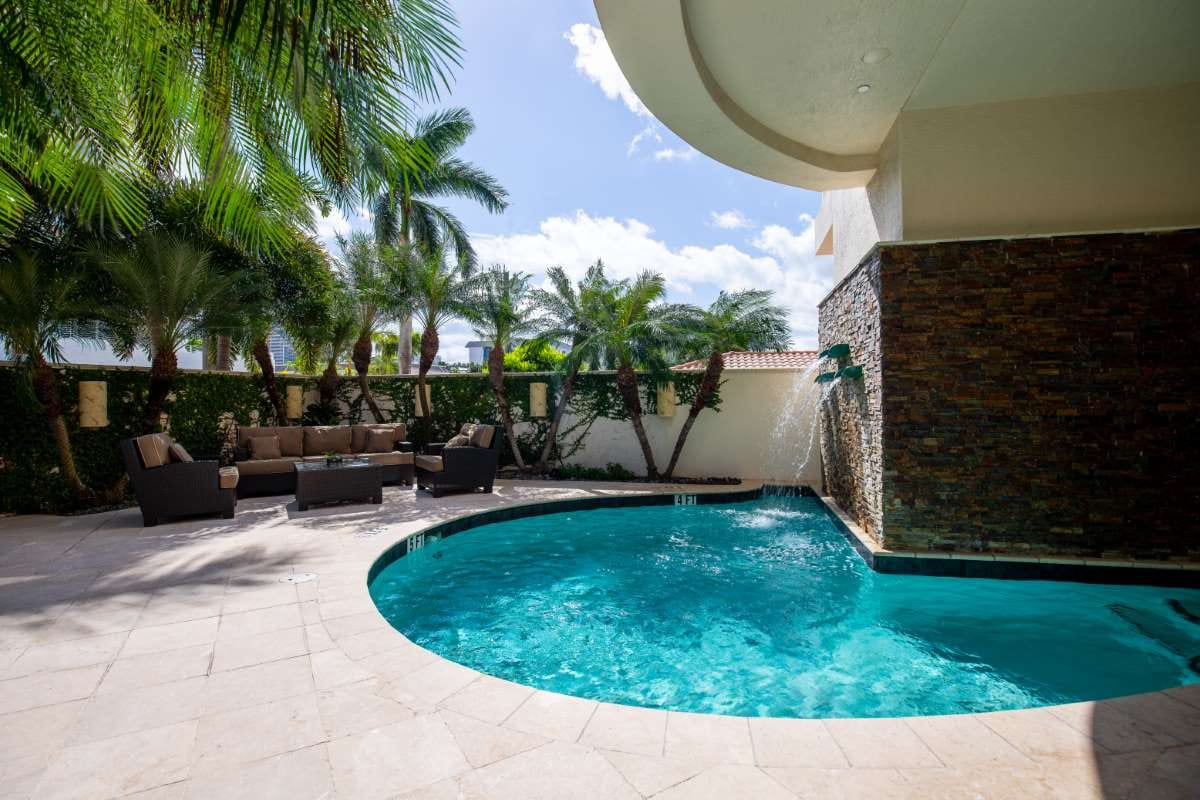
📌 Key Takeaway: A profitable Florida pool route is built on disciplined geographic clustering, predictable recurring revenue, and a service model tailored to each city's distinct customer base.
Why Florida Remains the Country's Strongest Pool Service Market
Florida's warm climate keeps residential pools in service nearly twelve months a year, which means weekly maintenance contracts rarely go dormant. For a pool service owner, that translates into stable monthly recurring revenue and predictable cash flow that lenders and partners take seriously. Sarasota's coastal neighborhoods, Estero's master-planned communities, Hialeah's dense residential grid, the estate-style lots of Southwest Ranches, and Miramar's mix of starter homes and luxury builds all share one thing: high pool density per square mile. The job is not finding pools. The job is acquiring them efficiently, servicing them profitably, and holding onto them long enough to compound your route value. Browsing available pool routes for sale in Florida is often the fastest way to skip the cold-start phase and begin generating revenue in week one.
Mapping Your Service Territory Before You Quote a Single Stop
The single biggest mistake new pool route owners make is taking accounts wherever they can find them. A pool that pays you $140 a month but adds thirty minutes of drive time will quietly erode your margin until you wonder why you cannot pay yourself. Open a map and draw tight clusters. In Sarasota, that might mean focusing on Palmer Ranch or Lakewood Ranch. In Estero, target the gated communities along Corkscrew Road. In Hialeah, work zip-code-by-zip-code rather than chasing scattered referrals. Southwest Ranches favors estate routes with fewer, higher-ticket pools, while Miramar rewards density along Pembroke Road and Miramar Parkway. Aim for ten to fifteen stops per day within a five-mile radius before you expand outward.
Pricing That Survives a Bad Week
Set your weekly service price using three numbers: chemical cost per pool, drive time cost per stop, and your target hourly net. In most of these Florida markets, a standard chlorine pool runs between $130 and $185 per month for full-service weekly maintenance. Salt pools and screened cages can push that higher. Build a tiered menu so the customer chooses, not you. A basic chemical-only check sits at the bottom, full service in the middle, and a premium tier with filter cleans and equipment inspections at the top. Tiers raise your average ticket without forcing every prospect into one price.
Choosing Between Building a Route and Buying One
Cold-canvassing a new neighborhood with door hangers and Google Ads can work, but it takes six to eighteen months to reach forty paying accounts. Acquiring an existing route compresses that timeline to days. When you compare the cost of customer acquisition through marketing against the per-account price of a turnkey route, the math often favors acquisition, especially for owners who want to start drawing income immediately. Reviewing the current inventory of established pool service routes in your target city lets you compare both paths with real numbers in front of you.
What Each City Demands From Your Service Model
Sarasota customers expect polish. Branded shirts, clean trucks, and written service reports matter more here than in any other market on this list. Lose a Sarasota account through sloppy communication and you will not get it back. Estero's HOAs are strict about chemical storage and truck parking, so confirm community rules before you accept work. Hialeah rewards Spanish-speaking technicians and same-day responsiveness; a bilingual office line will outperform any marketing spend you can name. Southwest Ranches has fewer pools per mile but larger bodies of water, often with attached spas, waterfalls, and screen enclosures. Charge accordingly and never bid these by phone. Miramar sits in the middle: competitive on price, loyal once you earn trust, and full of referral potential through tightly knit neighborhoods.
Equipment, Chemicals, and the First Truck Setup
You do not need a new truck. You need a reliable one with a cap or covered bed, secured chemical storage, and a route-optimized layout. Stock liquid chlorine, muriatic acid, cyanuric acid, calcium chloride, and a quality phosphate remover. Carry two telescoping poles, two leaf rakes, two brushes, a vacuum head with hose, and a digital test kit. Keep a backup pump motor and a small inventory of common cartridge filters in the truck so a service call does not turn into a second trip. Every minute you save through preparation is a minute that compounds across hundreds of weekly stops.
Routing Software and the Real Cost of Drive Time
A paper route sheet works until you hit thirty accounts. After that, the drive time penalty becomes invisible and expensive. Use software that lets you sequence stops by geography, flag chemical-only versus full-service visits, and capture before-and-after photos. The photo log alone resolves more billing disputes than any contract clause you can write. When a customer asks why their pool looked green on Wednesday, a timestamped photo from Tuesday's service ends the conversation.
Retention Is the Real Business
Acquiring an account costs between $150 and $400 once you factor in marketing, time, and follow-up. Losing that account in month four wipes out your investment. Build retention into the service itself. Send a brief monthly summary email with chemical readings. Reply to texts within four hours during business days. Show up on the same day each week, ideally at a consistent time window. Customers do not need to love you. They need to never wonder whether you came.
Scaling From Owner-Operator to Multi-Truck
The first forty accounts belong to you alone. Account forty-one is where the decision arrives: hire a technician or cap the route. Most owners wait too long. A second technician should be hired when you are turning down work, not when you are exhausted. Pay hourly plus a per-stop bonus, ride along for the first two weeks, and require photo documentation on every stop. The route owners who scale past one truck almost always do so by treating training as a daily habit rather than a hiring event.