📌 Key Takeaway: A high-converting pool service landing page combines a single audience-focused message, fast load times, visible trust signals, and a frictionless call-to-action that makes scheduling service the easiest next step a homeowner can take.
A landing page is not your website's home page, and treating it like one is the single biggest reason most pool service operators get poor results from their ads. A landing page exists for one job: convert the click you just paid for into a phone call, a form fill, or a booked first-clean. Every element on the page either supports that conversion or distracts from it. The good news is that pool service is a high-intent local category, which means a well-built page can routinely convert 15 to 30 percent of paid traffic when the offer and audience are matched correctly.
Start With One Audience and One Promise
Most pool company landing pages fail because they try to speak to everyone at once: weekly maintenance customers, one-time green-pool cleanups, equipment repair, new pool startups, and commercial accounts. Pick one. The traffic source you are running, whether that is Google Local Service Ads, Facebook lead forms, or Nextdoor sponsored posts, should be matched to a page that answers exactly what that visitor searched for. If someone clicked an ad for "weekly pool cleaning in Tampa," the headline above the fold must say "Weekly Pool Cleaning in Tampa" almost word-for-word. This is called message match, and it is the single largest lever you have over conversion rate. Operators who buy established accounts through services like pool routes for sale often inherit a customer mix that already tells them which service to lead with, because that is what existing customers are paying for month after month.
Above the Fold: What the First Screen Must Do
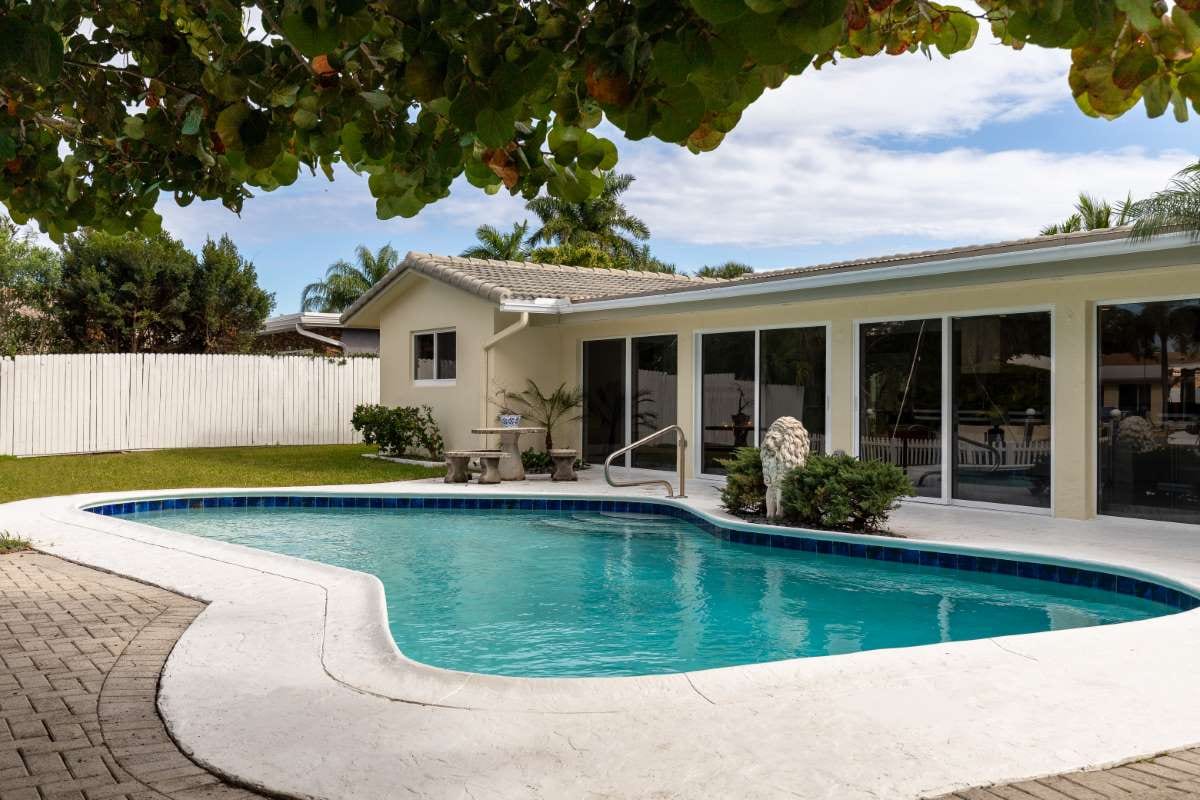
The visible area before a visitor scrolls has roughly five seconds to communicate three things: what you do, where you do it, and what to do next. Keep your headline under ten words and front-load the service plus city. A working example: "Crystal-Clear Pools in Phoenix, Starting at $115/Month." Underneath, a single supporting line should remove the most common objection. For pool service that is usually price uncertainty or contract anxiety, so something like "No long-term contracts. Free first inspection. Same-week start." works well. Place a phone number in tap-friendly format on the top right, and a primary button such as "Get My Free Quote" that scrolls to or opens a short form. Background imagery should show a real, clean residential pool, not a stock photo of a luxury resort. Authenticity converts better than aspiration in this category.
The Form Is the Product
The form on a pool service landing page is the actual conversion event, so it deserves more thought than the rest of the page combined. Ask for the minimum needed to qualify and follow up: name, phone, address or ZIP, and pool type or size. That is it. Every additional field cuts conversion rate by roughly 5 to 10 percent. Do not ask for email if you plan to call within an hour, because a phone number is far more valuable for fast follow-up in a local service business. Use a button label that describes the outcome, not the action. "Get My Free Quote" outperforms "Submit" by a wide margin in tested pool service campaigns. If you can offer instant scheduling through a calendar widget, conversions climb again because you eliminate the back-and-forth that kills momentum.
Trust Signals That Actually Move the Needle
Pool service is a trust-heavy purchase because the customer is handing over a gate code and access to their backyard. Generic "licensed and insured" badges are table stakes, but specific trust signals convert. Show your real Google review count and star rating with a screenshot, not just a number. Include two or three short customer quotes with first name, last initial, and neighborhood, ideally next to a photo of the actual pool you service. A short founder video, even shot on a phone, dramatically lifts conversion because it puts a face on the business. Display the number of pools currently serviced or years in operation if either number is impressive. Operators who acquire routes through structured programs like pool routes for sale can legitimately point to the size of their book of business as social proof from day one.
Speed, Mobile, and the Technical Floor
More than 70 percent of pool service searches happen on mobile, often from a homeowner standing next to a green pool. If your page takes longer than three seconds to load, you lose roughly half of that traffic before they ever see your headline. Compress every image to under 200 kilobytes, remove any chat widgets or pop-ups that block the form, and host the page on infrastructure that serves from a content delivery network. Test the page on an actual mid-range Android phone over a cellular connection, not just your desktop. Tap targets should be at least 44 pixels, the phone number should trigger a dialer on tap, and the form fields should pull up the correct keyboard, with the numeric pad appearing for phone and ZIP inputs.
Match the Offer to the Season and the Market
A landing page is not a static asset. The offer at the top should shift with the season and with what the market is currently feeling. In April and May across the southern states, lead with pool openings and algae-prevention plans. In July, lead with vacation coverage. In October, lead with closings and equipment winterization. A simple swap of the headline offer can double conversion rate without touching the rest of the page. Track conversion by source so you know which ad creative, which keyword, and which neighborhood produce the cheapest booked customers, then double down on what works and kill what does not within two weeks of launching any new campaign.
Test One Thing at a Time
Once the page is live, resist the urge to redesign it every month. Pick one variable, run it for at least 200 clicks against the control, and keep the winner. Headline first, then form length, then button color and copy, then trust signal placement. Small, disciplined tests compound into a page that quietly outperforms competitors who keep starting over. The operators who win in pool service marketing are not the ones with the prettiest pages. They are the ones who treat the landing page as a living instrument and tune it every quarter.