📌 Key Takeaway: A disciplined marketing budget for a pool service business should funnel roughly 8 to 12 percent of revenue into a mix of local SEO, neighborhood targeting, and referral incentives, with constant measurement to redirect dollars toward the channels that actually book recurring weekly accounts.
Marketing a pool service company is fundamentally different from marketing a retail product or a national brand. Your customers live within a tight service radius, they are looking for someone they can trust on their property every week, and they typically stay with the same technician for years once a relationship is built. That reality should shape every dollar you spend. A well-allocated marketing budget for a pool route owner is less about chasing impressions and more about putting steady, predictable pressure on a defined geographic area until your truck is full. Below is a practical framework for deciding how much to spend, where to put it, and how to know whether it is working.
Set a Budget Anchored to Recurring Revenue
The first decision is how much to spend. A residential pool service business typically operates on monthly recurring revenue, which makes budgeting cleaner than for one-off service industries. A reasonable starting point is to set aside 8 to 12 percent of gross monthly revenue for marketing during a growth phase, and 3 to 5 percent during a maintenance phase when you simply want to replace natural attrition.
To use that number well, calculate your lifetime customer value first. If an average residential account pays 165 dollars per month and stays for four years, that customer is worth nearly 8,000 dollars in gross revenue. Knowing this lets you set a sensible customer acquisition cost ceiling. Many pool operators are comfortable spending 150 to 300 dollars to win a new account because the payback window is short and retention is high. Without that math, owners either underspend and stagnate or overspend on channels that look exciting but never produce booked routes.
If you do not yet have enough route density to justify a marketing budget at all, it can be more capital-efficient to acquire existing accounts directly. Purchasing established pool routes for sale gives you immediate cash flow that you can then reinvest into marketing, rather than starting from zero and burning through savings on ads.
Prioritize Local Digital Channels
For a pool service company, the highest-return digital channels are almost always hyper-local. Google Business Profile optimization should be the first dollar you spend, and it is largely free other than your time. Complete every field, post weekly updates, collect reviews after each successful service visit, and respond to every review within 48 hours. A well-tended profile routinely drives more booked calls than paid search for established route owners.
Local SEO on your website is the next layer. Build dedicated pages for each city and neighborhood you serve, with genuinely useful content about water chemistry quirks, common equipment in that area, and pricing transparency. These pages compound for years.
Paid search through Google Ads can work, but only with tight geographic targeting and negative keyword lists that filter out commercial pools, hotel work, and DIY searches if those are not your market. Expect to spend 400 to 1,200 dollars per month to see meaningful lead flow, and watch your cost per booked account, not your cost per click.
Use Neighborhood-Level Offline Tactics
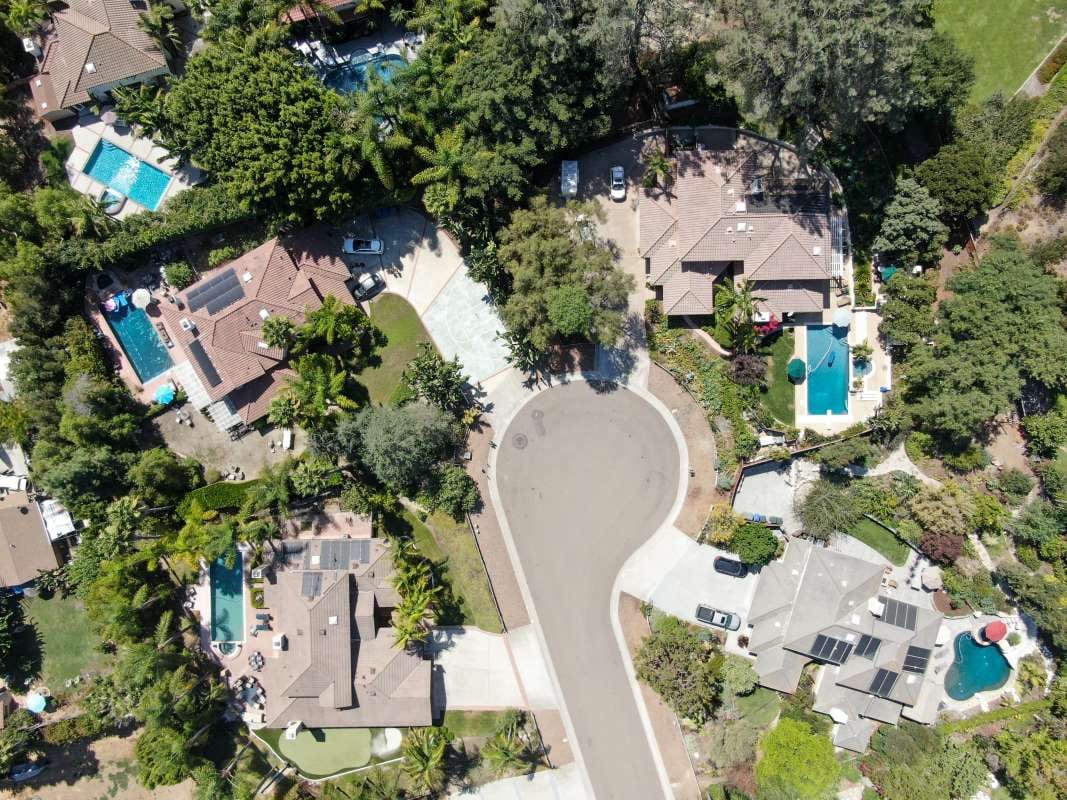
Digital alone leaves money on the table in this industry. Door hangers, yard signs at active customer homes, and direct mail postcards still produce some of the lowest cost-per-acquisition numbers in pool service marketing. The reason is simple: when a homeowner sees your truck in their cul-de-sac three weeks in a row, then receives a postcard, then notices a yard sign two doors down, the cumulative effect is trust.
Allocate roughly 20 to 30 percent of your marketing budget to these neighborhood-level offline tactics in the markets where you already have one or two accounts. The economics are very different in a neighborhood with existing density versus a cold zip code, so concentrate spend where you already have a service footprint. Vehicle wraps belong in this category too. A clean, professional wrap on a route truck is one of the highest-ROI advertising investments a pool company can make, often producing leads for a decade on a one-time spend of 2,500 to 4,000 dollars.
Build a Referral and Retention Engine
The cheapest new customer is the one referred by an existing happy customer. Pool service is a relationship business, and referrals close at dramatically higher rates than cold leads. Dedicate 10 to 15 percent of your marketing budget to a structured referral program, typically a one-month service credit for both the referring customer and the new account. Communicate this program through monthly invoice inserts, a footer line in every email, and direct conversations at the pool.
Retention spending is marketing spending. A small annual gift, a handwritten holiday card, or a free filter cleaning on the anniversary of service costs almost nothing compared to replacing a lost account. Treat your existing book as a marketing asset and you will spend less acquiring the next one.
Measure What Actually Books Routes
Tracking is where most pool service owners lose the plot. Vanity metrics like website visitors or social media followers do not pay your fuel bill. Focus on three numbers: cost per qualified lead, cost per booked account, and 90-day retention rate of newly acquired accounts. Use a simple spreadsheet or a low-cost CRM to tag every new customer with the channel that produced them.
Review these numbers monthly, not quarterly. If door hangers are producing accounts at 110 dollars each and Facebook ads are producing them at 380 dollars each, shift dollars accordingly the following month. The owners who grow fastest are not the ones with the biggest budgets, they are the ones who reallocate spending quickly based on real booking data.
Reinvest Profits Into Route Expansion
Once your marketing engine is producing accounts at a predictable cost, the next question is how to scale. Many owners hit a plateau because organic growth in a single zip code is naturally limited. At that point, combining marketing with strategic acquisition becomes powerful. Buying additional pool routes for sale in adjacent territories gives you the density needed to make your marketing dollars work harder, because every route truck in a neighborhood amplifies the visibility of your brand and lowers your per-stop drive time. Marketing and acquisition are not separate strategies, they are two levers on the same growth machine, and the operators who understand that consistently outpace those who pull only one.