📌 Key Takeaway: Pool routes in Florida offer strong recession resistance because pool maintenance is an essential, recurring service that homeowners continue to pay for even when discretionary spending tightens.
Why Recession Resistance Matters for Pool Route Investors
Every few years, economic headlines stir anxiety among business owners and investors. Stock markets dip, consumer confidence falls, and discretionary spending contracts. For anyone considering buying or operating a pool route in Florida, a natural question is whether this business model can hold up when times get tough.
The short answer is yes — and understanding why requires looking at both the nature of pool service work and the specific dynamics of Florida's residential market.
Pool Maintenance Is a Non-Discretionary Service
One of the clearest signs of a recession-resistant business is that customers keep paying even when they are cutting back in other areas. Pool maintenance fits that profile well.
A backyard swimming pool is a major capital investment. Homeowners who have already paid tens of thousands of dollars to install a pool have a strong financial incentive to protect it. Neglecting routine chemical balancing, filter cleaning, and equipment checks does not save money in the long run — it creates expensive repairs and shortens the life of the equipment.
Because of this, pool service agreements tend to be sticky. Clients rarely cancel during an economic downturn because the alternative — a green, cloudy, or equipment-damaged pool — costs far more to fix. That stickiness translates directly into predictable monthly income for pool route operators.
Recurring Revenue Makes Pool Routes Financially Stable
A pool route is not a one-time transaction business. Accounts are serviced on a weekly or bi-weekly schedule, and clients are billed on a recurring monthly basis. This structure creates a revenue base that behaves almost like a subscription business.
During recessions, subscription and contract-based income streams tend to hold up better than project-based or one-off sales. Operators who own multiple accounts across a route see relatively smooth cash flow because no single cancellation dramatically changes the picture. And in practice, attrition tends to be low when service quality is maintained.
The income is built on relationships and contracts, not on quarter-by-quarter consumer sentiment.
Florida's Climate Creates Year-Round Demand
Geography matters significantly in the pool service industry. In northern states, pool season is roughly six months long. Operators have to manage seasonal swings in income and staffing, which adds complexity and risk.
Florida is different. Warm temperatures persist throughout the year, which means pools need maintenance every month. There is no off-season to plan around, no period where income drops to near zero while fixed costs continue. A route in Florida generates income in January just as it does in July.
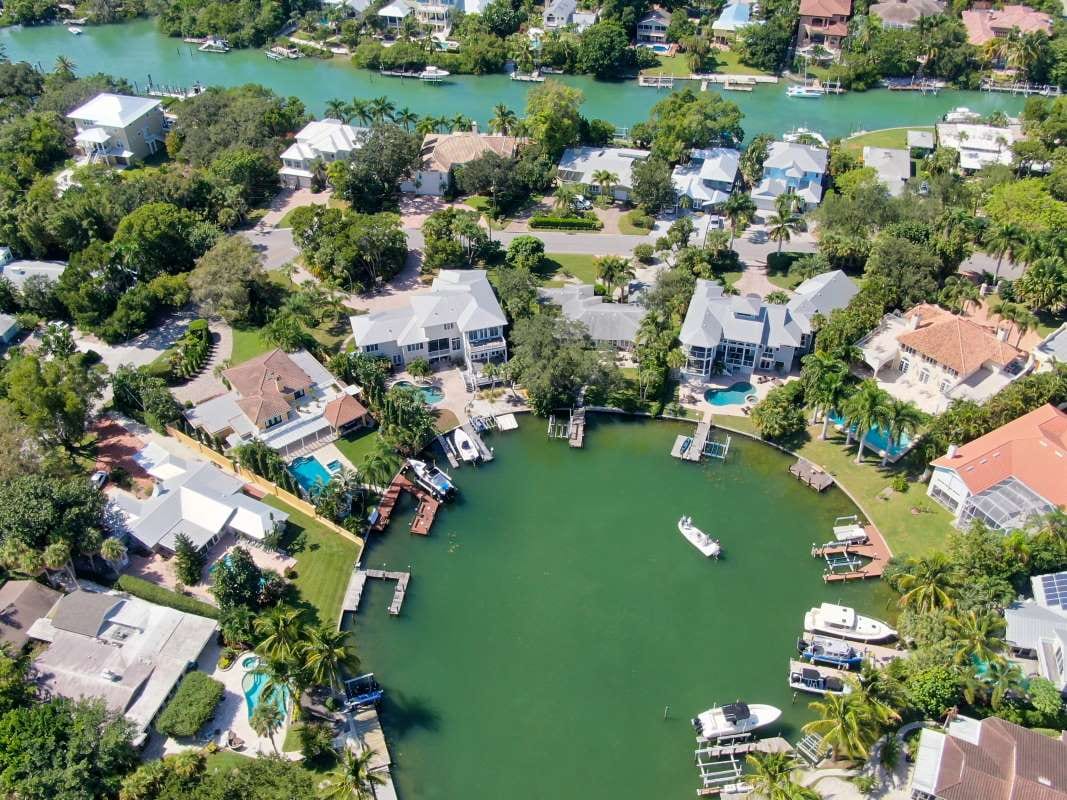
Beyond the weather, Florida has one of the highest concentrations of residential swimming pools in the country. High pool density keeps routes geographically compact, which reduces drive time and fuel costs, increasing the effective efficiency of each service day.
Population Growth and Housing Supply Support Long-Term Demand
Florida has been one of the fastest-growing states in the country for over a decade. People relocating from higher-cost states bring their lifestyle expectations with them, and pool ownership is a significant part of Florida's residential appeal.
New construction continues to add pool-equipped homes to the market across cities like Orlando, Tampa, Jacksonville, and throughout South Florida. This ongoing housing supply means the total number of serviceable pools grows year over year, giving pool route operators a favorable underlying demand trend even when the broader economy softens.
Even when home sales slow during a recession, existing homeowners still need their pools maintained and pool service demand does not disappear.
Lower Overhead Keeps Margins Intact Under Pressure
During economic downturns, many businesses face the painful combination of falling revenue and stubbornly high fixed costs. Pool routes are generally insulated from this problem.
The primary costs of running a pool route are chemicals, equipment, vehicle fuel, and labor if you hire technicians. There is no commercial lease, no large inventory to finance, and no heavy machinery to maintain. This lean cost structure means that even modest revenue is enough to sustain a healthy margin, which makes the business easier to manage through periods of economic uncertainty.
Operators who keep their routes well-organized and their clients satisfied can run a profitable pool service business without the overhead burden that squeezes other industries during downturns.
Buying a Route Versus Building One From Scratch
One of the key advantages of purchasing an established pool route rather than starting fresh is that the accounts already exist. There is no lead generation phase, no months of building a client base while income is minimal, and no guesswork about whether enough demand is present in the area.
When you buy an established pool route, you begin generating income from day one. The accounts are in place, the service schedules are set, and the clients have an existing relationship with the business. This is particularly valuable during uncertain economic times, when starting a new business and hoping demand materializes carries real risk.
Established routes also come with historical performance data that gives buyers a clear view of what to expect.
Practical Steps for Evaluating a Pool Route Purchase
If you are considering a pool route acquisition in Florida, a few key questions will help you evaluate whether a specific route makes sense:
Account concentration: Is income spread across many accounts, or is a large share of revenue tied to a small number of clients? Diversified routes carry less risk from individual cancellations.
Geographic density: How tightly clustered are the accounts? A compact route reduces drive time and increases the number of pools a technician can service in a day.
Account history: How long have the clients been on service, and what is the historical cancellation rate? Longer-tenured accounts with low turnover signal stability.
Pricing levels: Are the accounts priced at current market rates? Underpriced accounts can be re-priced over time, but it is worth understanding the margin profile before purchase.
Taking the time to review these factors before committing gives buyers confidence that they are entering the business at a realistic and sustainable level.
Summary
Pool routes in Florida benefit from multiple overlapping factors that support stability during economic downturns: the essential and non-discretionary nature of pool maintenance, recurring contract-based income, year-round demand driven by Florida's climate, a growing population base, and low operating overhead. Together, these characteristics make pool routes one of the more recession-resistant small business models available to investors today.